Update 9/10/25 – It’s been three years since I last updated this post. A lot has happened, of course. The most obvious change, of course, has been the imposition of tariffs.
- In 2018, the Trump Administration put the first 25% tariffs on a wide range of good from China, including electronics and components.
- The Biden administration kept these in place. Full credit to them, as they had many top officials “yellen” at them to soften their stance.
- Most recently this year, the Trump administration expanded and extended the tariffs to include advanced tech and semiconductors.
Sadly, most Americans are so filled with hate politically that they can’t acknowledge anything good that their political “enemies” do. But in this case, both Trump and Biden showed strong leadership. Remember, this is not really about China, it’s about American corporations that have abandoned any semblance of a moral compass for the purpose of exploiting cheap China labor and cheap American consumers.
Companies are FINALLY beginning to see that they can’t just “wait out the clock” on this one, so they’re FINALLY ramping up production outside of China. It’s about time.
The biggest announcement to date has been Apple’s announcement in May that it would be producing US-bound iPhones in India to avoid tariffs and that Apple would be making all of its iPhone 17 models in India, not just the low end. This follows a similar approach that Nintendo took, where they continue to produce Switch 2 in China, but send Vietnam-made ones to the US.
It’s a start, but it’s also a sign that Apple and Nintendo are still hedging their bets, hoping that a new administration will come in and drop all the tariffs without making China do any reforms (the CCP refuses to reform because it knows it can wait out the clock).
I’ve refreshed the list below of Apple products that I have confirmed are available not made in China. But as always, check the box and if it says “made in China”, throw it back. Happily, if you’re in the US, there’s a good chance you’ll find something made in India or Vietnam.
1. iPhone 17 – Made in India
I’ve been waiting since I first started this site to feature an iPhone as a recommendation. That day is finally here. I hope.
Back in April, Tim Cook assured the world that Apple aimed to outsource all iPhones sold in the USA to India. I didn’t believe him for a second. We’ve heard this exact same thing before, many times.
But as of this writing, the Wall Street Journal and Reuters have confirmed that India supplied over 70% of iPhones sold in the US in the most recent quarter, and Bloomberg reports that this will continue.
You can preorder the new iPhone 17 from AT&T, Verizon, T-Mobile, and Apple on September 12, 2025. The phone officially releases on September 19, where you’ll be able to get them at retailers like Amazon and Best Buy. As always, check the box first before you spend any money, or if you get one from China, ask for a replacement within the return window.
Here’s a rundown of the new models:
- iPhone 17 (6.3″) — A19 chip, 120 Hz ProMotion, new 48 MP Dual Fusion cameras + 18 MP “Center Stage” selfie; up to 30 hrs video. Starts $799 (256 GB)
- iPhone 17 Air (6.5″) — Thinnest iPhone ever (5.6 mm) with polished titanium frame; A19 Pro; single 48 MP Fusion rear cam + 18 MP Center Stage selfie; up to 27 hrs video; eSIM-only. Starts $999 (256 GB).
- iPhone 17 Pro (6.3″) — New aluminum unibody with vapor-chamber cooling; A19 Pro; triple 48 MP (Main/Ultra-wide/Tele 4x/8x equiv.), pro video (ProRes RAW, Log 2, genlock); up to 33 hrs video. Starts $1,099 (256 GB).
- iPhone 17 Pro Max (6.9″) — All Pro features + biggest screen and best battery (up to 39 hrs); storage up to 2 TB. Starts $1,199.
Notes: All models get Apple’s new Ceramic Shield 2, 3000-nit peak outdoor brightness, and iOS 26/Apple Intelligence features.
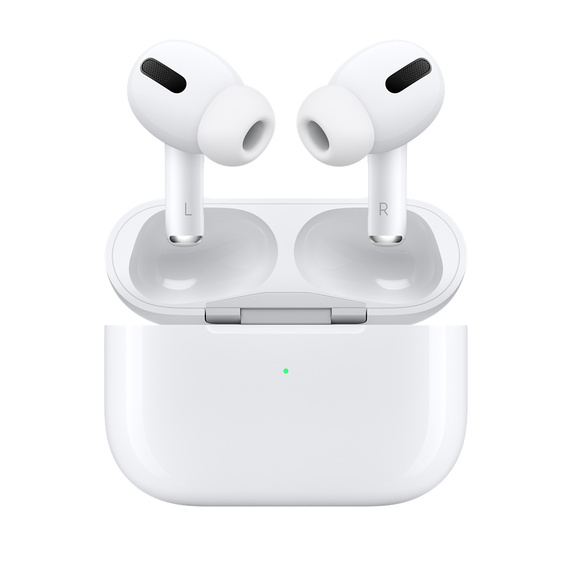
2. AirPods Pro 3 and Airpods 4 – Made in Vietnam
I’m listing these first because I happen to own a pair of AirPod Pro 2s myself, and I’m pretty happy with them.
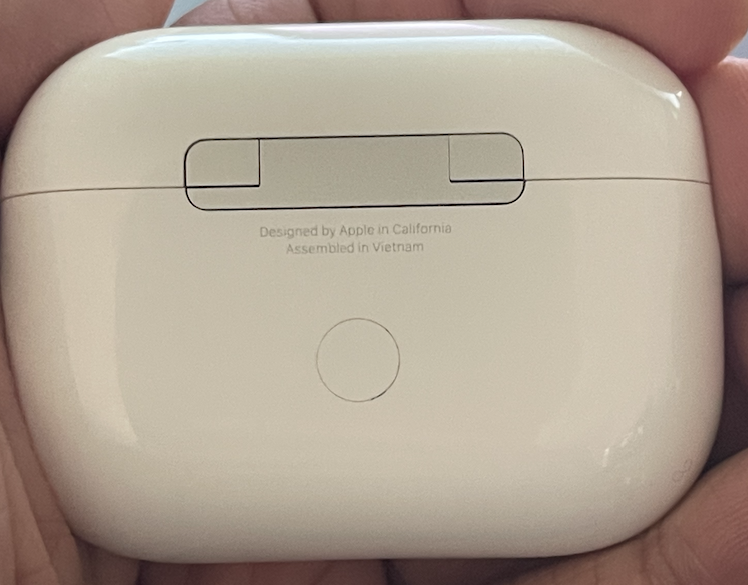
The new AirPod Pro 3s are amazing—better noise cancellation, heart rate sensing, and live translation.
If you’re in the market for AirPods, be sure you check the outer box before you buy. AirPods and AirPods Pros have been made in Vietnam since 2020, but due to supply chain problems in both Vietnam and China, production has shifted between the two. If you’re buying a pair you’re going to want to verify that the case AND both AirPods are made in Vietnam before buying. If you’re buying from Amazon, take advantage of their Free Returns service. Or go to an Apple store in person.
If you’re in the US you’re almost certainly going to get a made in Vietnam version, which means if you’re outside the US, you’re like going to get a made in China version.
One thing to bear in mind is that China-based Luxshare is Apple’s main supplier of AirPods, so some of your money is still going to the CCP. But Foxconn is building capacity in India to counter Luxshare’s large Vietnam footprint.
3. Apple Watch – Made in Vietnam
The new Apple Watch Series 11 sounds amazing, especially compared to the old Series 2 one I have (which I bought before realizing everything was made in China). This one can alert you if you have possible high blood pressure, provides a sleep score to help you track the quality of your sleep, and lets you get notifications to warn about irregular heart bears, sleep apnea, and low blood oxygen.
While a smaller share of these are still being made in China, these are predominantly made in Vietnam. Apple has been building out Watch production in Vietnam since 2022 and repeatedly has reaffirmed Vietnam as a key hub in various remarks throughout 2024 and 2025. Unfortunately they use both Luxshare (a China company) as their supplier in addition to Taiwan-based Foxconn, so they’re not completely divested from China, but it’s a start.
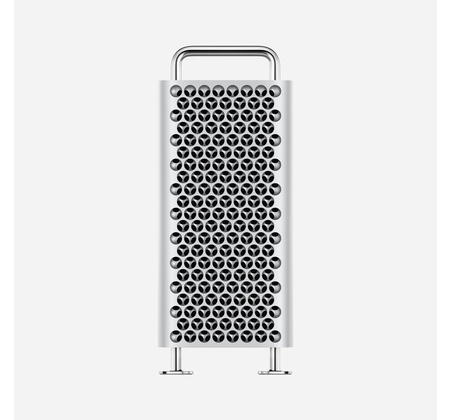
4. Mac Pro – Made in USA…kind of.
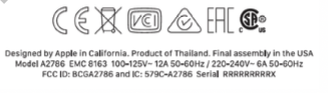
A lot of media outlets downplayed or even belittled the news, but I saw it as welcome, if mostly symbolic. Apple could have make a lot more profit if it plowed ahead with its plans to screw over its Austin-based employees, as well as suppliers in multiple states that were supplying parts. But it stuck to its guns.
The Mac Pro is Apple’s top-of-the-line Mac computer. At over $6,000 it’s not for everyone, but for those who need it, it’s a powerhouse performer.
For years, the Mac Pro had its final assembly done in Austin, Texas, making it the only Apple computer with “Assembled in USA” on its label. But in June 2019, Apple announced that Mac Pros would be made in China. After some negotiations with the federal government, Apple switched courses and announced in September 2019 that it would indeed continue to assemble the Mac Pro out of Austin, in exchange for some tariff exemptions.
In 2023 Apple clarified its labeling due to increased FTC scrutiny to make clear that most manufacturing happens in Thailand, with final assembly happening in Texas. I believe most US-based customers will get one of these, while non-US customers are likely to still get things made in China.
You can pick one up at places like B&H and of course Apple. Just be sure to read the box–China does manufacture these too for customers outside of the US market, so you’ll want to make sure you don’t get one of those.
Let’s hope that whenever the new model is announced, Apple will not cave and shut down its last remaining US manufacturing facility, especially if the new Administration starts to ease up on tariffs.
5. Mac Mini – Made in Vietnam
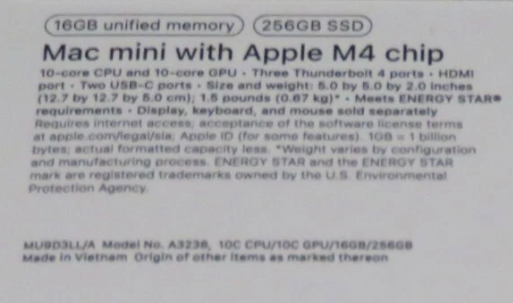
Starting in 2021, Apple started moving production of the Mac Mini to Malaysia. Most recently it looks like they’re coming out of Vietnam.
The Mac Mini is a small form factor desktop computer that sit somewhere between the entry-level iMac and the professional Mac Studio and Mac Pro. Unlike iMac it doesn’t come with a built-in monitor, but all you really need to do is get an HDMI cable to connect it to your high definition TV.
Buy one at Amazon, but as always, check the outside box first to make sure you’re getting a Malaysia one and not a China one.
6. Mac Studio – Made in Vietnam
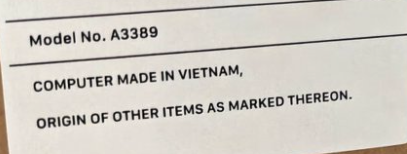
The next step up is the Mac Studio, which sits between the Mac Mini and the Mac Pro and retails for about $2000. In March 2022, and there were reports of people getting units made in Malaysia, although as of 2025, this user on X reported getting his made in Vietnam.
The newest version has the blazing fast Apple M4 chip. You can pick one up at B&H. And of course, as always, check the box.
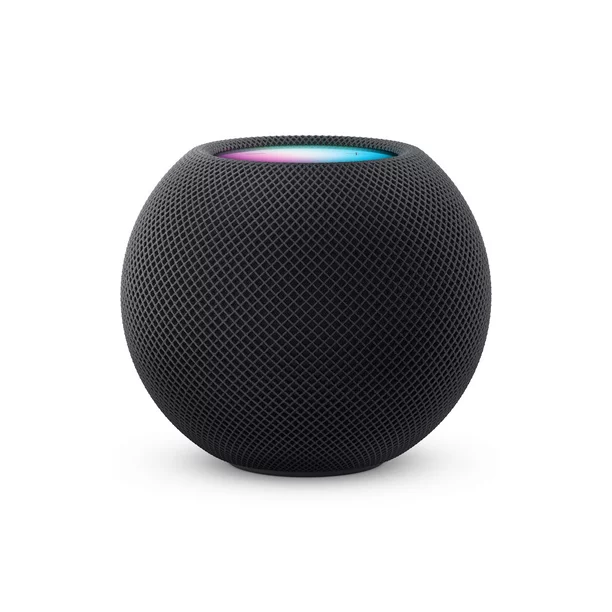
7. HomePod Minis – Made in Vietnam
Apple launched their HomePod smart speaker back in 2018 to compete with the Amazon Echo and the Google Home. They eventually discontinued it in 2021, citing the success of the cheaper HomePod Mini.
Happily, since it was released in late 2020 the HomePod Mini has been made in Vietnam. There’s a very good chance if you buy one that it’ll be made there. You’ll want to pick yours up at B&H or a carrier like Verizon.
Conclusion:
These are the products that you’ll have a better-than-average shot of getting made outside of China. While Tim Cook said in April 2025 that “nearly all” non-iPhone devices shipped to the USA were originating from Vietnam, which presumably would include MacBook Pros and iPads. I haven’t seen any independent corroboration of this so far (in fact, just the opposite), so this is just one of those things I’ll believe when I see.
Have you come across any other Apple product getting its manufacturing diversified outside of China? Let us know in the comments!
Original post and updates:
I’m going to put my original post and all the updates I’ve made on this topic here for posterity, mainly because I want everyone to remember the damage that Apple did to this country by being the single biggest brand to build up and empower China.
Update 12/4/22
There was a flurry of people on Twitter today retweeting out this article with the clickbaity title “Apple Makes Plans to Move Production Out of China”.
It seems that the China government’s atrocious COVID lockdown policies in Zhengzhou (site of Foxconn’s “iPhone City” manufacturing plant) resulted in Apple finally realizing that it needs to diversify its supply chain. According to the WSJ article, iPhone City had at one point alone made 85% of iPhone Pro models.
The Tweets were followed by a lot of high-fiving and comments like “it’s about time”. I was excited at first myself–according to the article, Apple is accelerating its plans to manufacture iPhones outside of China, mainly in India and Vietnam.
But there’s one line I read that I found chilling.

A lot of people don’t understand the world of smartphone and laptop manufacturing. The way it works, a contract manufacturing company called an Original Equipment Manufacturer (OEM) gets the contract from Apple, and they’re responsible for building the manufacturing plants to make it. For years, Apple has relied solely on Taiwan-based OEMs like Foxconn and Pegatron. Foxconn and Pegatron, in a move that looks increasingly foolish by the day, decided to go all-in on China to build their manufacturing plants, so they could enjoy cheap labor and not have to learn Vietnamese or Hindi. Foxconn would pocket the bulk of the profits (taxes on which would be paid to the Taiwanese government), and the local employees in China would receive a smaller cut.
What the Wall Street Journal article is saying is that Apple is not telling Foxconn to expand manufacturing to countries like Vietnam and India—Apple is “diversifying” to include China-based OEMs, who presumably will all be looking to set up manufacturing operations in those countries.
I’ll give you a simplistic example of what this means.
Let’s say today that Taiwan-based Foxconn gets 80% of the profits and 20% goes to local operations in China.
If what the Wall Street Journal is saying is correct, it means moving forward, China-based companies like Luxshare and Wingtech will get 80% of the profits and 20% would go to local operations in India or Vietnam. In other words, if a year from now you buy an iPhone that says “Made in India” or “Made in Vietnam”, it’s likely that even MORE of the profit from the price you pay will go to China, the Chinese Communist Party, and the People’s LIberation Army compared to today. And MUCH less will go to Taiwan to defend themselves.
I hope the people celebrating will take the time to understand all this. Clearly, The $275 billion that Tim Cook poured into China established intricate relationship that may never be able to be untied.
Buy a Samsung phone.
Update 9/21/22
It’s amazing how quickly the rumors on Apple’s attempts to divest from China are coming in these past few weeks. The latest rumors from JP Morgan analysts are that Apple intends to manufacture as much as 25% of all Apple products outside of China by 2025 (they’re at 5% currently). Even better, it’s Taiwanese vendors who are playing a key role in relocating to India and not continuing the trend of the last 20 years of feeding the hand the bites them.
I’ll believe it when I see it–as I said, Tim Cook’s $275 billion investment in China is not going to be an easy thing to extricate Apple from. If you need a smartphone today, go with Samsung.
Update 9/8/22
Apple just announced the new iPhone 14. It was an announcement I’d been anticipating–and dreading. Would Apple double down on using China as its manufacturer for iPhones, despite the China government’s increasing draconian control over its population–including forced lockdowns when someone comes in contact with someone else who has the sniffles? Or would it FINALLY start to diversify its supply chain so that it’s not reliant on a dictatorial power?
As I expected, the answer was nebulous. It’s clear that Apple has been trying to loosen its ties with China, but that’s no easy task. The $275 billion that Tim Cook “invested” in China had the effect that anyone with common sense would have seen clearly. China was able to establish a monopolistic hold on all aspects of manufacturing.
There are some glimmers of hope. To India’s credit, they were able to pass laws that the corrupt United States could not in limiting China’s manufacturing footprint. Bloomberg reported that Apple and FoxConn are going to attempt to ramp up its production in India–up to now most India production was gone to serve the India market, but let’s hope some of them make it to other markets.
The last paragraph of this article is chilling in how ignorant the reporters are. “India’s workforce and factories haven’t easily adopted the highly controlled practices that Apple requires from supplies”. What this really says is this: Apple and the Chinese Communist Party share the same approach to ensuring efficiency among their manufacturing workforce: put a gun to their head.
Original post (8/1/22)
How I became an Apple fan(atic)
I’ve been an Apple fan since the 1980s. Like most kids my age, we used Apple II computers at school (you’ll know someone was a real Apple fan–and is really old like me–if they spell the names properly as Apple ][ Plus and Apple //e).
Off the top of my head, here are the Apple computers I owned over the years. I had a Macintosh SE/30 when I started college. I got a Powerbook Duo my later years in college–I remember I was one of the first to ever use a laptop in college and got reamed out in front of the whole class by a professor because he assumed I was playing games (I told him I was taking notes, and he sheepishly apologized but I dropped his class anyway). When I started my first job I asked for–and got–a PowerMac 7200 for work. Since then I’ve used for both work and home Performas, iMacs, Macbooks, iPods, iPads, iPhones, and every Apple product you can think of.
How Apple betrayed my trust
My Apple //e was a workhorse that still boots up 38 years later. I’ve saved all my old Apple products from the 1990s for nostalgia, and to this day I know I can take out my Mac SE/30, the Apple IIGS, and my old PowerMac from storage and have it boot up just like it did three decades ago. Apple had once owned manufacturing facilities in California and Colorado, which is where those products and many more like them came from.
But by the early 2000s, most of its product assembly moved to China, thanks to decisions (supported by Apple) of its ODMs like Foxconn and Quanta. The irony of Foxconn and Quanta, of course, is that they’re Taiwanese companies, and yet they outsourced their production to China–yes, the same China that is buying tanks and missiles that are pointing to them and their families. It’s the ultimate in stupidity, but money makes people do strange things.
Starting around that time, I started to notice my Apple products breaking. I’m sure you’ve experienced the same if you’re an Apple user. Power cables would fray and disintegrate. Keyboards would experience stuck keys or repeated keys. Monitors would blank out. And it all would conveniently happen after the warranty expired. But because of my early experience with Apple, I bought more and more from them, like pigs returning to the trough.
The last straw
The last straw came with my MacBook Pro 13 inch 2018. I bought the machine for a ridiculous amount of money. But as soon as the warranty expired, I noticed the case started expanding because the battery was swelling. Also, the letters on the keyboard were repeating.
I was happy that Apple had a program in place to replace my keyboard for “free”, but when I took it in to the Apple store the “Geniuses” (a whole bunch of vacuous millennials who don’t know a PRAM from a DRAM) told me I had to pay $200 to get the battery replaced before I could get the keyboard replaced “for free”. Then, as I was preparing the laptop to bring it in for service, the screen broke because the battery had swelled so large.
And the only response from the Apple “Geniuses”? That I was foolish for not buying AppleCare. That’s right, it’s gotten to the point where Apple insults its customers by questioning why they didn’t buy the insurance knowing that their product would fail.
And that’s when I told myself–my next computer is going to be a Gigabyte and my next phone is going to be a Samsung, unless Apple comes to its senses and gets the hell out of China.
Tim Cook’s Deal with the Devil
In late 2021, it became clear why Apple never diversified its supply chain out of China. Tim Cook had made deals with China back in 2016 in response to some classic Communist Party blackmail. It seems that the China government was going to crack down on Apple with a whole bunch of regulatory actions, when Tim Cook rushed in to appease them. He signed a deal promising more than $275 billion of business to China-run hardware and software firms, as well as to invest billions of dollars in building up China’s infrastructure and to invest in China tech companies and universities. Where is that $275 billion coming from? A part of it came from every iPhone and Macbook we purchased that was made in China.
The tariffs put in place by the Trump Administration and continued by the Biden Administration (for now) are already having a positive effect in terms of getting ODMs to diversify some manufacturing to places like India, Vietnam, Malaysia and Thailand. But far too many of Apple’s suppliers are still in China. And the recent trends is tenuous as lobbyists with lots and lots of money (many of them funded right out of the coffers of the CCP) wield influence in Washington and in corporate boardrooms.
Some hope?
But for die-hard Apple fans there is hope. In recent years, no doubt inspired by public outcry when idiotic moves like Tim Cook’s are exposed to the sunlight, and probably helped by the fact that Tim Cook’s 5 year deal is finally coming to a close, Apple has started to direct its suppliers to move more production outside of China.
Most recently, Apple said that it would be shifting some iPad production to Vietnam after the CCP’s disastrous decision to lock down Shanghai’s citizens. This may be a temporary thing until Shanghai’s residents are allowed to go back to work, but if you’re lucky this means you might be able to find a “Made in Vietnam” iPad in the coming months if you look hard enough.
Now before you get too excited, bear in mind that these Vietnamese production lines are owned by BYD, a China conglomerate. Their decision to build a production line in Vietnam is no doubt related to the 2018 tariffs, as was the decision to produce Mac Studio computers out of Malaysia, even though final assembly was done in China.
So yes, a lot of Apple products you see that are marked “Made in Vietnam” or “Made in Malaysia” still have China’s stink on them, but by not being marked “Made in China” you know that a decent portion of the product’s production was outside of China. If your heart is set on Apple, buying one of their products not made in China will at least send a message.
If you’re lucky enough to be shopping in India, Apple does make iPhones there. But most of the iPhones made there are destined for the India market.
How do I buy an Apple product not made in China?
This list is going to be a little different than most of the lists on this site. Most of the products I highlight on this site are made in one place. But because Apple has so few products with so much demand, they’ll often make it in multiple places. So there will be situations where the same product and even the same model number are assembled in different countries.
So inclusion of a product on this list merely means that I’ve confirmed that this product has SOME of its production lines outside of China. But before you buy the product, you should make sure to check that it wasn’t made in China before you buy it. By law, they have to put the country of origin, i.e. where the product has undergone the most “substantial transformation” on the outer box, so make sure you go into an Apple Store or a retailer like Best Buy to double-check before you buy. And set expectations for yourself–despite Apple’s improvements since 2019, 90% of their products continue to be made in China. But if you’re lucky, you’ll be able to find one that’s not (and hold on to it, as it may become a collector’s item).

I really can’t take this company seriously.
The 275 billion deal, the poisoning of workers by using harmful substances, environmental scandals, explosion with deaths, minors at work, suicides among workers, etc…
There are plenty of alternatives available. Besides that, the brand is also much too expensive, price/quality ratio is completely missing.
I don’t own anything from Apple and will not buy anything from Apple, at least as long as they continue their ridiculous, selfish policies.
I understand that you Americans look at it differently because it is an American brand. The question is how much is actually American about this brand…?
I hear you, Paul. As you can probably tell it gets very personal for me, as I was a lifelong fan and promoter of Apple back when they were still the same Apple that Steve Wozniak and Steve Jobs founded and made “insanely great” products out of California and Texas.
I’m not sure if Jobs would have dove head-first into cheap, abusive China manufacturing as much as Tim Cook did, but there’s a part of me that feels he would have resisted the CCP’s extortion and made more of a stink about Foxconn’s labor practices.
In many ways, Apple is typical of American brands. In the 1990s they saw outsourcing to China as a way they could cut costs–no different than the outsourcing they’d done to Taiwan and Japan in years past.
And then over the years. and especially in 2007, there were warning signs of the dangers of getting too close to China, but their shareholders were already hooked by that time and demanded more cheap manufacturing., regardless of the costs to human rights or geopolitics.
The CCP was all too happy to comply, first by subsidizing its suppliers so that companies in no other country could establish a foothold. And then once China suppliers dominated the market, the CCP started pushing its weight around more. The $275 billion deal Tim Cook made was not just Tim Cook selling out every other country–the alternative would have been Apple being subjected to unprecedented regulation. It wasn’t until President Trump’s tariffs in 2018 that America FINALLY started to push back (and there’s talk that the current administration wants to get rid of those).
Bottom line, there are a lot of people who are going to buy Apple no matter what, especially in the US. This post is really meant to challenge those people–IF you are going to buy an Apple product, buy one that’s not made in China to send a message.
As for me, I’m still using my iPhone 12, which was made in China (unfortunately I bought it before I started this site and really started to get serious). My next phone will probably come in the next year or two. My plans at that point are to buy a Samsung Galaxy, unless I can find an iPhone 14 made in Vietnam.
Let’s hope the CCP’s dumb moves like locking down cities like Shanghai will do to the marketplace what American business and government could not–make other countries more appealing for manufacturing.
I wrote an article that was published nationally, condemning China for the Coronavirus, and urging reparations in the trillions of dollars globally.
When I went to an Apple store and wanted to buy a new Mac Book Pro, they brought out the box and it indicated “made in China.”
I said “thanks, but no thanks.”
Will they ever build them in the USA?
I am starting to draw to the same conclusion Paul. I cannot believe that the United States and other countries are doing business with a Godless communist nation such as China. There are many good Chinese people on this planet, its their Government that is not good for anyone.
This is a great insight into Apple’s efforts to diversify its supply chain! It’s encouraging to see the push for manufacturing in other countries. I’m curious to see how this shift will impact the pricing and availability of their products in the future. Thanks for sharing!
It’s refreshing to see a spotlight on Apple’s efforts to diversify its manufacturing beyond China. As consumers, we need to support brands that prioritize ethical production and sustainability. Excited to see how this will shape the future of tech!
It’s great to see Apple exploring manufacturing outside of China! I’m excited about the potential for more diversified production. This could really support local economies and reduce dependency on a single country. Can’t wait to see how this develops in 2025!
Great post! It’s encouraging to see Apple exploring manufacturing options outside of China. I hope this trend will continue and pave the way for more companies to diversify their supply chains. Looking forward to seeing how this affects product quality and pricing!
It’s refreshing to see a focus on Apple’s efforts to diversify its manufacturing footprint away from China. The “No to China 2025” initiative could really shape the future of tech production and supply chains. I hope more companies follow suit for the sake of global economic balance and innovation!
This article is a gem.