Last updated May 15, 2026. Original post date December 9, 2023
I figured it’s time for a quick update to this post. A lot has changed since I first published this two and a half years ago. Apple has started to produce enough Apple Watches in Vietnam that I can finally start to recommend them, although with an asterisk. Samsung and Garmin continue to produce excellent products, and Google has completed their transition out of China.
In short, lots of good options.


Best Smart Watches Not Made in China
1. Samsung Galaxy Watch 8
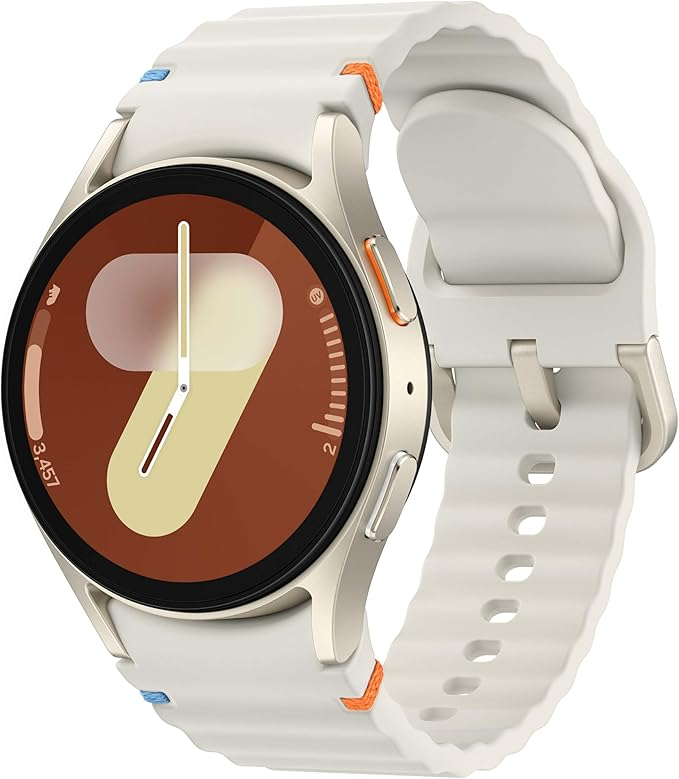
Just as you won’t be able to find a new Samsung smartphone made out of China, you won’t find a Galaxy Watch made in China either. These have been completely made in Vietnam and South Korea for years now after Samsung closed their last factory in China. Vietnam handles most of the assembly as their global manufacturing hub, while South Korea handles high-end components and certain premium runs.
The current lineup represents a massive leap forward in performance and intelligence. The Galaxy Watch 8 introduces a blazing-fast 3nm processor and runs Android Wear OS 6 featuring native Google Gemini AI integration, allowing you to manage tasks and dictate stream-of-consciousness replies with incredible fluid precision.
Health tracking got a serious upgrade, too, with a redesigned BioActive sensor capable of measuring an advanced Antioxidant Index and flagging early signs of sleep apnea (Samsung Galaxy smartphone required).
Meanwhile, serious athletes can upgrade to the rugged, titanium-framed Galaxy Watch Ultra, which pushes battery life up to 100 hours in power-saving mode and boasts dual-frequency GPS alongside a 3,000-nit display that stays perfectly crisp in direct, harsh sunlight.
2. Garmin Venu 4 and others
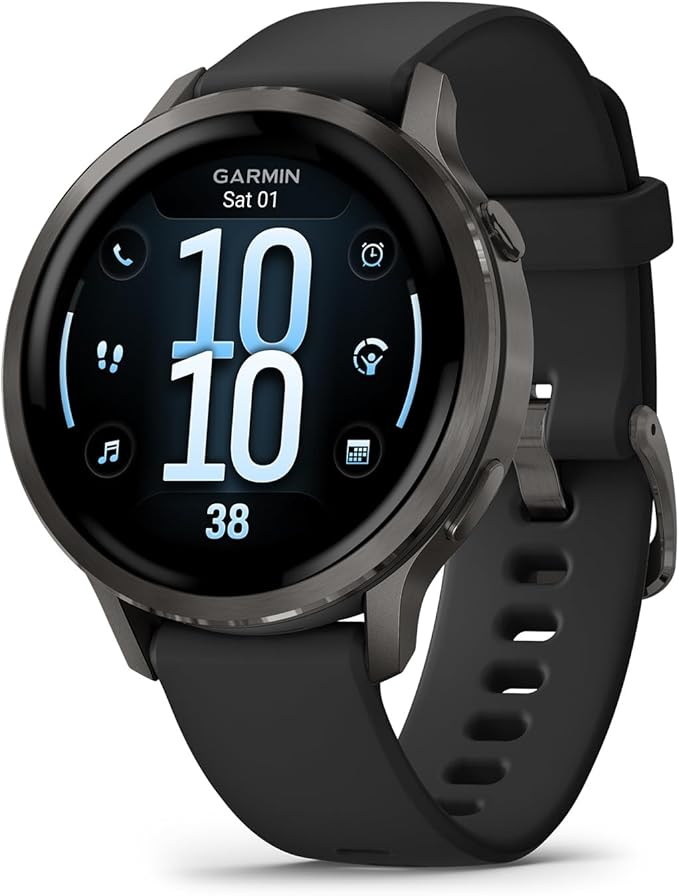
This is a brand I was surprised to see on this list. But sure enough, the majority of Garmin watches are made in Taiwan (in major high-tech hubs like Zhongli, Xizhi, and Taoyuan) or at their facility in the USA (in Kansas). There is a manufacturing facility in China, but word is that it handles minor automotive components and doesn’t account for much of their wearable production. Let’s hope it stays that way.
Garmin is well known among athletes, be it professional athletes, distance runners, triathletes, hikers, and those of us doing everyday workouts. They did a nice job of replicating and in some cases outdoing some of the training and workout features of Fitbit and Apple. Lots of folks use it as their personal trainer.
To a newcomer to Garmin, the model names can be downright confusing. I counted dozens of different names on their site! But luckily, there are a number of reviews on the Web that can help you pinpoint the perfect one for you. Here are three of the best ones to look at right now:
Garmin Venu 4 – This is the latest version of their flagship everyday smartwatch. It costs around $550 and has features that a much more expensive Apple Watch doesn’t have, including an incredible multi-day battery life, skin temperature tracking, and a newly built-in LED flashlight. It allows you to use your watch as a microphone and speaker to take calls or talk to your digital assistant via Bluetooth. It’s their most stylish model which balances fitness tracking and everyday use perfectly.
Garmin Fenix 8 – At $900 to $1,000, this ultra-premium outdoor watch doesn’t come cheap, but you get what you pay for. Garmin folded their old high-end “Epix” features right into this model, giving you a stunning screen paired with rugged titanium, dive-rated waterproofing, off-grid voice commands, and a powerful safety flashlight. It’s the ultimate choice for a serious athlete.
Garmin Forerunner 570 (or the new 170/970) – Tom’s Guide and Wirecutter consistently name the Forerunner series as their top overall pick for pure running watches. Garmin recently simplified the line into clear “essential, advanced, and premium” tiers, giving you options whether you want a budget-friendly entry point (the 170) or a data-heavy powerhouse (the 570 and 970). No matter which one you choose, these feature gorgeous, bright AMOLED displays, pinpoint accurate GPS, and onboard music, all wrapped in a lightweight design made for hitting the pavement.
4. Google Pixel Watch 4
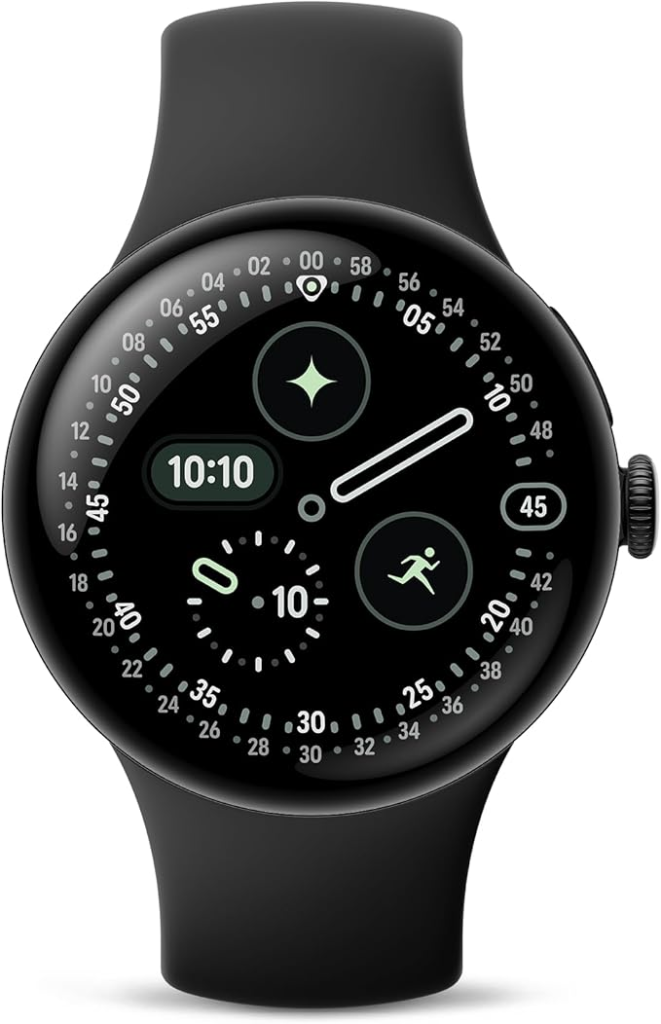
The Pixel Watch is, of course, Google’s own attempt to compete in the smartwatch market.
A lot of people may not realize that Google acquired Fitbit a few years back, and they wasted no time in building all the best things from Fitbit straight into their flagship wearable. The current Pixel Watch 4 has everything you’d expect, from heart rate sensors and blood oxygen levels to fall detection and advanced skin temperature monitoring. They’ve also given it a serious boost in performance, packing in a massive 40-hour battery life, smooth Wear OS 6 tracking, and full Google Gemini AI integration. Plus, it seamlessly handles your everyday routines via Google Wallet and Calendar.
The reviews of the very first Pixel Watch weren’t stellar, but Google has clearly hit its stride with the newer generations. It is still maddening that they seem to go out of their way to avoid saying exactly where these devices are made, but industry supply chain reports and the regulatory text on the boxes confirm that Google shifted the bulk of its hardware development and final assembly out of China and into Vietnam (cheaper components like the band and charger might still originate elsewhere, but it’s difficult to completely avoid that these days).
5. Apple Watch Series 11 & Ultra 3
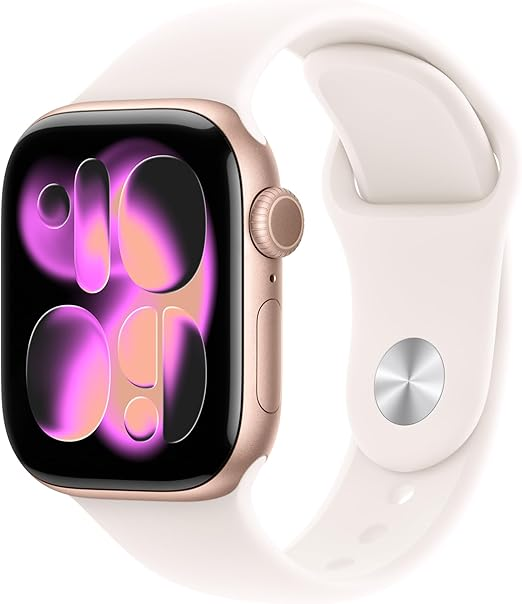
I, of course, have left Apple Watches off this list for years because Apple made them exclusively in China. But I’m happy to finally put them in now that Apple Watches from Vietnam are showing up in retail stores. If you’re looking for a fitness tracker, I’d still recommend Garmin as the superior product. But if you just need something that works in the Apple ecosystem, it’s the obvious choice.
Apple has been quietly executing a massive, multi-year supply chain diversification plan, moving the vast majority of its flagship wearable assembly over to high-tech manufacturing plants in Northern Vietnam via partners like Foxconn and Luxshare. If you buy a current-generation Apple Watch in the US today, checking the regulatory print on the back of the box will almost certainly reveal an “Assembled in Vietnam” stamp.
As for the hardware itself, Apple continues to impress. The Apple Watch Series 11 is the sleek, everyday champion, offering a remarkably thin chassis alongside a massive, bright display that lets you track workouts, check notifications, and control smart home tech with flawless fluidity.
If you need something practically bulletproof, the titanium-clad Apple Watch Ultra 3 is a tank. It pushes battery life way past the standard one-day mark, boasts specialized dual-frequency GPS for exact mapping, and can survive everything from deep-sea diving to extreme mountain trails.
Just keep in mind that Apple Watches are strictly locked into the iOS ecosystem—they simply will not work with an Android phone. Furthermore, due to a massive ongoing patent dispute with a medical tech company named Masimo, Apple has legally been forced to disable the blood oxygen tracking feature on all new watches sold directly in the US. If that specific health metric is a absolute dealbreaker for you, you’ll want to look at Garmin instead.
6. Masimo W1 Advanced Fitness Tracker Smartwatch (no longer available direct to consumers)

The multi-year legal drama between Apple and medical tech giant Masimo is one of the wildest intellectual property stories in wearable history. The dispute started when the International Trade Commission found Apple guilty of infringing on patents held by Masimo—specifically, the proprietary technology for pulse oximetry (measuring blood oxygen levels). It escalated so heavily that Apple was forced to entirely disable the blood oxygen feature on all new Apple Watches sold in the US just to keep them on store shelves, and a federal jury later hit Apple with a massive $634 million verdict for patent infringement.
In a particularly sleazy move, Apple poached a number of top executives and more than a dozen employees prior to introducing pulse oximetry into its watches in 2020. If you recall, that was just around the time that blood oxygen levels were all over the news. Rather than offering to license Masimo or acquire its technology, Apple simply stole it. It reminds me of how Amazon simply copied (stole?) ideas from air quality monitor companies to sell its own branded product.
Here’s the thing about Masimo: they’re not a company that engages in patent trolling. They legitimately invented this technology and use it to produce clinical medical devices that hospitals and healthcare providers depend on globally.
For a brief window, Masimo entered the consumer market with their own American-made wearables, like the Masimo W1, assembled at their Irvine, California headquarters. They blew consumer watches out of the water on data accuracy—tracking precise hydration indexes, oxygen levels, and breaths per minute with actual FDA clearance. Sadly, Masimo has since discontinued its consumer division to refocus entirely on hospital contracts, meaning you can no longer buy these watches on retail shelves. But the legacy of their legal battle lives on every time an American consumer straps on a new Apple Watch and finds the blood oxygen sensor locked away.
Conclusion
A lot has changed for the better in the last two years, thanks largely to tariffs and the fallout from China showing its totalitarian card during COVID. China, of course, still dominates supply chains for every kind of electronic component, and every cheap sub-$100 smartwatch is made in China. But at least brands are finally diversifying after years of building up China.
Do you know of other smart watches that have avoided the China trap? Let us know in the comments!
Archive
Original post: from 12/9/23
It’s really tricky to find a smart watch not made in China. Of course, it’s not even worth asking about the 800-pound Gorilla in the room. All Apple watches are manufactured in China. As I mentioned on my post about smartphones, there’s been a lot of chatter about its suppliers Luxshare Precision Industry and Foxconn moving to Vietnam. But Apple is lost—while Foxconn is a Taiwanese company, Luxshare is based in China, so even if they do move production to Vietnam they will still funnel millions of dollars into the coffers of the CCP.
FitBit hasn’t done much better. They pioneered the smart watch industry years before Apple, but like Apple they went all-in on China manufacturing. Back in 2019 there was a lot of press about how FitBit was moving out of China to get around the 2018 tariffs, but all of that quieted down when smart watches were quietly removed from the list of products that imposed tariffs. I’m guessing that FitBit can probably thank Apple for their lobbying.
Suunto is a company based out of Finland that produces great watches, some of them in Finland itself. But it was sold to China-owned Anta Sports in 2019, only to be re-sold to Chinese technology company Liesheng in 2022. Some Suunto watches are still made in Finland, but a good portion of the profits and all of the corporate taxes go to fund the CCP. No thank you.
It’s depressing to look at other smart watch makers. Polar makes everything in China, as does Coros. Even the $2000 TAG Heuer Connected Watch is, unbelievably, made in China.
But surprisingly, there are options, which I’ll detail below.
- Tags:
- smart watches

I have the Tissot T-Touch Connect Solar.
Great watch with lots of smart functions.
Swiss made
Suunto watches are designed and made in Finland and are amazing
They were sold to Chinese.