Last updated 6/13/26. Original publish date 1/28/26. Previously updated 3/24/26 and 4/20/26.
Click here to skip my commentary and go directly to the list of best routers not made in China
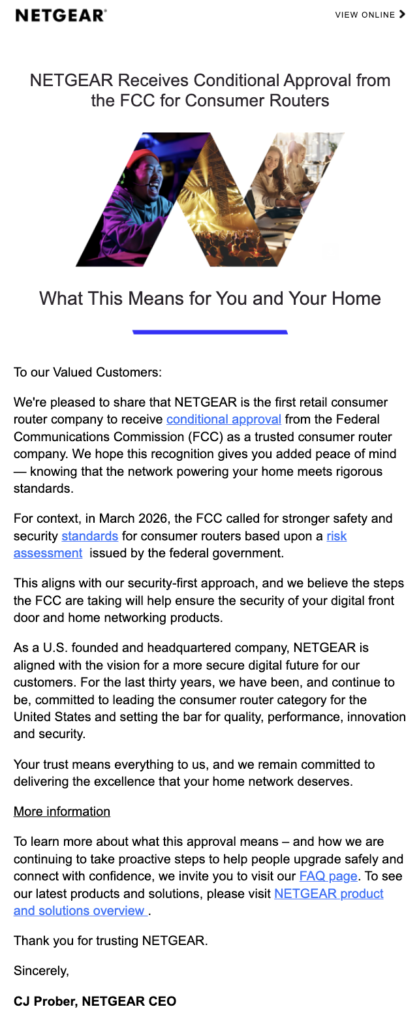
Here’s some interesting news. Netgear announced that it was the first consumer router company to receive conditional approval from the FCC. As I wrote in my last update, the Federal Government had announced that it would only allow consumer routers made in the USA to be sold in the USA.
Given there are virtually no routers made in the USA, some people ridiculed this decision. But we’re seeing the somewhat brilliant result of this ruling: the Federal Government did provide a path for manufacturers to submit non-US made products for “conditional approval”, which would go through DHS and DoW. This way, not only could the FCC review the technical specs, security experts in those departments would be able to double-check two things: first, that the product was secure from hacking from China and other rogue states, and second, that any manufacturer who was being manipulated by the CCP to inject backdoors or monitoring software would be caught quickly.
Netgear had already done the work to separate from China, making its routers in Vietnam, Thailand, and Indonesia, so they had a huge headstart. That they’ve gotten a stamp of approval from three government agencies is a big deal, and thus they’ve become my #1 pick for best routers not made in China.
We’ll see if other router companies follow suit (and I’d love to be a fly on the wall as TP-LINK tries to convince the Department of Homeland Security and the Department of War that they will NOT allow the CCP to use their equipment to spy on Americans). Until then, the choices are clear: Starlink (for those who use that as their Internet provider) and Netgear (for the rest of us).
Previous post follows:
On March 23, 2026, the FCC updated its “covered list” to state that new routers manufactured, assembled, designed, or developed outside the USA can no longer receive the FCC’s equipment authorization allowing them to be imported, marketed, or sold in the United States, starting on March 1, 2027.
Here’s the part a lot of people are missing: companies can apply for conditional approval if they can prove their router doesn’t pose a national security risk. These approval requests will go to the Department of War and the Department of Homeland Security.
This ruling doesn’t affect existing approved models that are already on the market; manufacturers can keep making them, retailers can keep selling them, and consumer can keep using them.
It does affect all new models, and applies regardless of a company’s nationality—even US brands like Netgear, Eero, and Google are impacted, as well as all of the routers I listed below.
This measure is almost certainly going to be challenged in court, but the reasoning is a very real one: China has so dominated the supply chain for this kind of equipment that vulnerabilities and exploits aren’t just theoretical: they HAVE been used at attack Americans right in their homes.
This may seem like a draconian step, but it’s a necessary one. As we’ve seen since 2001, corporations will simply not regulate themselves. Corporate executives will sell out their companies, their communities, and whatever honor they have to see a bump in the next quarter’s earnings. I don’t know how long this ruling by the Federal government will last, but it’s long overdue.
Foolish companies will try to fight it in court. Smart companies will begin making their own routers domestically, or at least finally lock down their routers so that the CCP can no longer exploit them.
A lot of whiners on social media are mocking the decision, saying that virtually no consumer router is made outside the US today. Yes, and that’s precisely the point. This move is intended to get corporations to start making them in the US. More likely, most will be applying for conditional approval, which will require them to prove that their equipment is completely safe from foreign attack, shifting the burden of proof from the FCC to the manufacturer and making sure the DoD and DHS see every router that’s sold in the US. Very smart.
Others are saying that Americans will be “shut out” of the best technology. These people simply don’t understand how economics work. The vast majority of demand and the most advanced users are in the USA. Is TP-Link going to survive without the US market? Everyone knows the answer to this.
The irony of the past 25 years is that while corporate US has been clamoring to get access to China’s market (which never existed), China has been exploiting the American market. How? American companies innovate to meet market demand, China companies copy them and sell them to consumers at pennies on the dollar. It’s about time this stopped.
Original post follows.
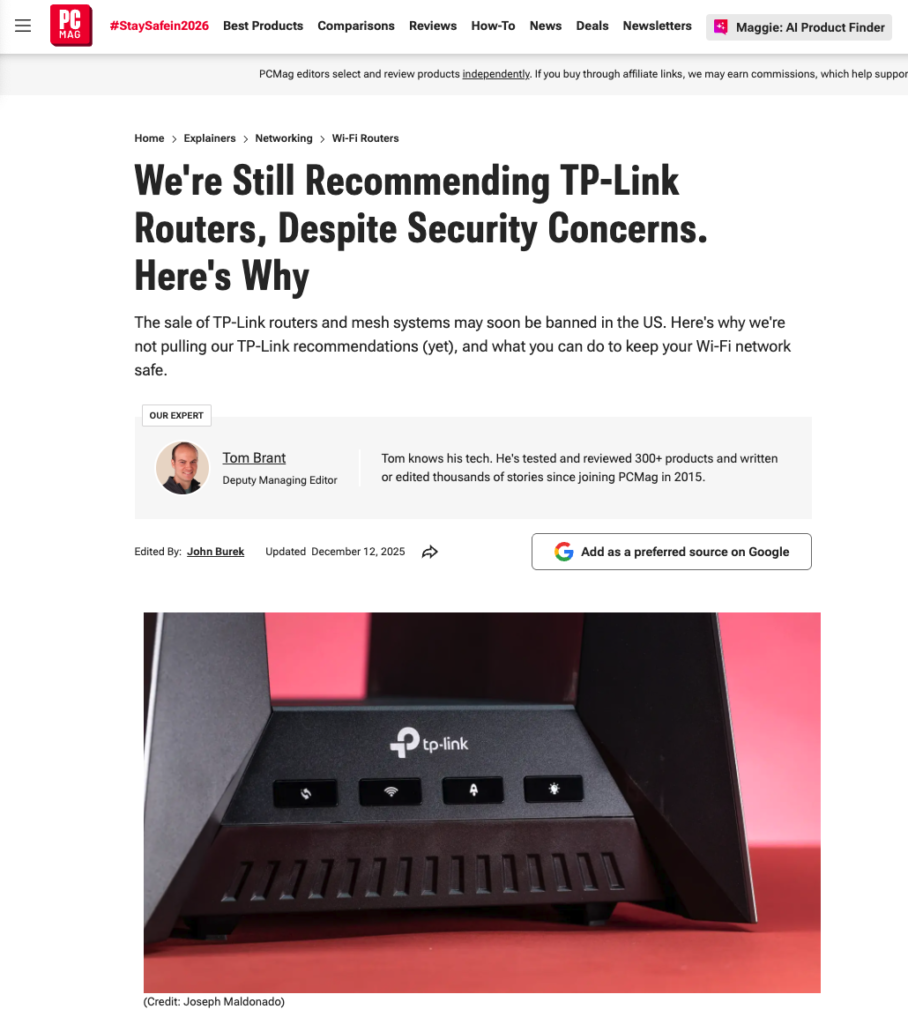
I admit, there are times when I read things in the media and just get angry. It’s these people’s jobs to protect us and inform us, but they’ve all become propaganda arms to protect their revenue sources.
This article by the supposedly esteemed PC Magazine is a good example. There’s been news that the US Government is looking to limit the proliferation of TP-Link routers in the United States.
A Wall Street Journal article shared data that 65% of routers sales were TP-Link. This was a bit of sensationalist journalism—the number was closer to a 37% unit share of direct-to-consumer routers (which itself comprises about 30% of the installed router market). TP-Link was quick to put out PR disputing the WSJ figure, and their PR team updated their FAQs to state something along the lines of “even though we were founded in Shenzhen and our owners are in Shenzhen and having a presence in China means that we need to comply with China law that means we share whatever data they tell us to share with them…we would never, ever, EVER share YOUR data. Pinky promise!
Among those who fell hook, line, and sinker for their PR was this PC Magazine editor, who has a smug, “I know better than you” tone throughout his piece.
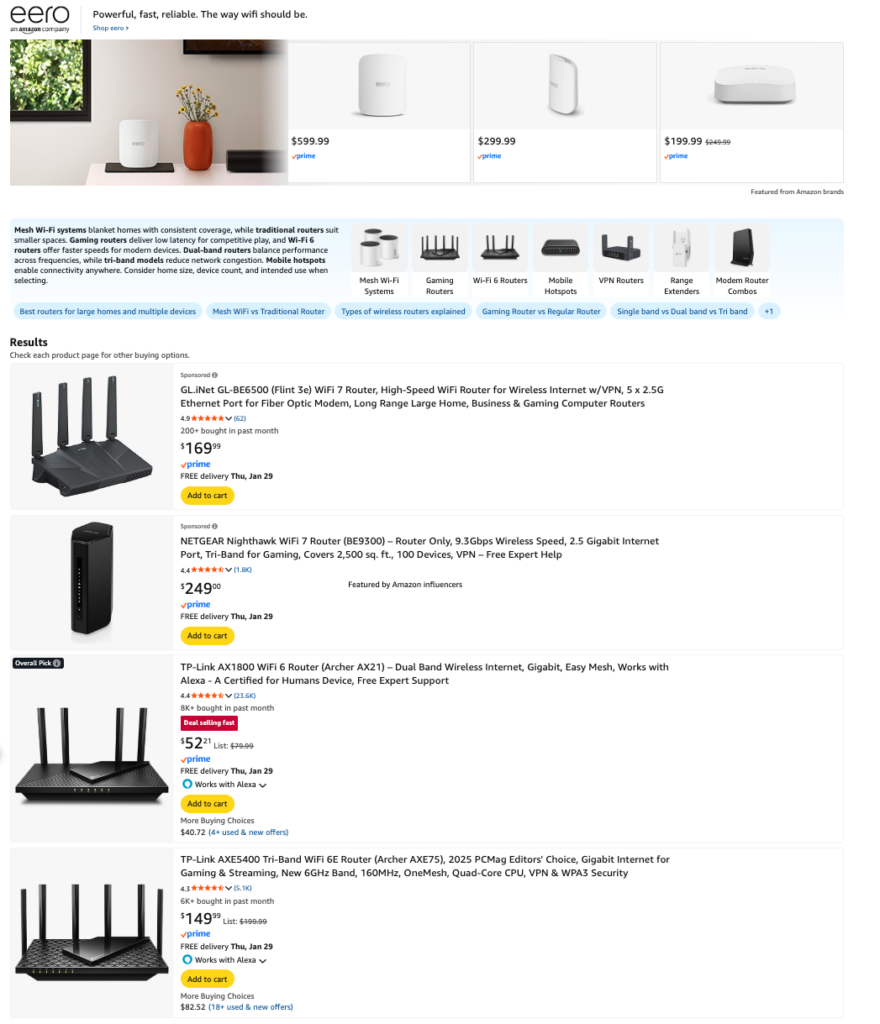
Pricing
First, he suggests skepticism at the US government’s suggestion that the CCP is keeping TP-Link router prices artificially low.
One needs not look past an Amazon search for “routers” to see TP-Link dominating, to the point that Eero (Amazon’s own brand), GL.iNet (itself a China brand), and Netgear have to pay for advertising to even have a chance of appearing on page one.
How does TP-LINK keep its prices so low? We’ve seen it a million times. They steal technology. Their government subsidizes them and gives them favorable treatment with regulations. They employ workers under
All of these things allow them to undercut everyone else on price—including those they stole their technology from.
Amazon’s not necessarily being nefarious here, they’re just being “hands-off”. Their rankings are based on a combination of sales velocity and user ratings, and clearly TP-Link is priced to move.
Security
The PC Magazine editor also scoffs at the notion that TP-Link is lax with security, despite the fact that just days before writing this article, I see news headlines about TP-Link fixing critical security flaws in their camera products and plenty of independent videos confirming multiple issues in their routers. TP-Link’s official statement is, “whoopsies! how did we miss that one?” And yet whenever you are reading this, I guarantee if you search for “security flaw tp-link” you will find some fresh news about a security hole that TP-Link “accidentally” left in.
The PC editor—I kid you not—even has this quote in his article.
TP-Link’s stance that it takes security seriously, is reassuring
TP-Link may have presence in Los Angeles, but they still answer to their headquarters in Shenzhen, despite what their PR tells you. That means that members of the CCP sit on every level of their corporate hierarchy. The only shock would be if they did NOT intentionally create exploits for products that Americans are buying from them millions at a time.
What’s even more shameful about PC Magazine’s cheerleading is that there are PLENTY of options that are made in Taiwan and by US-based companies in Vietnam. As much as PC Magazine dances around one technical detail or another to try to prove TP-Link’s superiority, remember that THEY also benefit from high sales velocity, as their main revenue stream is affiliate sales. There are countless routers that are just as good or better than TP-Link in terms of build quality, technology, and security, but the reason you see TP-Link raved about by sites like Wirecutter and PC Magazine is because that’s what drives revenue. It’s time to put that to an end.
By the way, some TP-Link routers are made in Vietnam now. Don’t think for a second that this means that you can trust them over ones made by non-China brands.

The Best Routers not Made in China
Approved for sale in the USA past March 2027
1. NETGEAR Orbi Series Mesh System or Standalone Routers

Note: if you purchase a Netgear routers through my link, I’ll receive a commission for the sale. Hopefully it’s obvious given Netgear’s excellent manufacturing choices and its recent conditional approval by the FCC (making it clear that they have NO built-in vulnerabilities that the CCP can exploit) that this had no bearing on my recommendation.
The FCC announced conditional approval covering broad NETGEAR consumer networking lines, including Nighthawk routers, Orbi systems, cable gateways, and cable modems. They’re definitely my #1 choice, and so I’ll dedicate a little more space for them here.
If you haven’t shopped for routers in a while, I’ll give you a quick rundown of current technology. There are basically two kinds of routers you can buy these days.
- A mesh system solves the problem for people in large houses (or even small apartments with tricky hallways) where an Internet signal can’t consistently reach the whole home. Instead of just having one router trying to blast its signal everywhere, mesh systems consist of one main unit and one or more satellite units placed around the house that “talk” to each other. If you have a large house, multiple floors, dead zones, thick walls, or lots of devices, this is the solution for you.
- A standalone router is what all of us have used since the days of Linksys routers. Your Wi-Fi signal gets weaker the farther you move away. This is still the best and most economical choice for those in smaller houses or apartments where your router’s Wi-Fi signal can reach every part of your home that you want it to.
Look for a router that supports Wi-Fi 7—that’s the newest and fastest standard, certified in early 2024.
Here’s a “buyer’s guide” that’ll help you choose the best model to buy.
Orbi mesh systems

Orbi 970 – The Top of the Line
Who it is for: large homes, demanding users, lots of premium devices, heavy streaming, gaming, and smart-home load.
The Orbi 970 is the flagship pick. NETGEAR lists it at up to 10,000 square feet, up to 27 Gbps, and up to 200 devices, with a quad-band WiFi 7 design. This is the “money no object” choice for people who want the biggest performance ceiling and the least compromise.
Best for: luxury homes, very large layouts, high-end fiber, and buyers who want the top Orbi without second-guessing.

Orbi 770 – The Best Choice for Most Homes
Who it is for: most families who want mesh done right.
This is the best “sweet spot” in the Orbi lineup. NETGEAR lists the Orbi 770 at up to 8,000 square feet, up to 11 Gbps, and up to 100 devices with a tri-band WiFi 7 design. That is why it makes the strongest best overall recommendation for most larger households: it gives you serious whole-home coverage without immediately jumping into flagship pricing.
Best for: larger suburban homes, people upgrading from WiFi 5 or WiFi 6, and shoppers who want premium mesh without going all the way to the 970.

Orbi 370 – Affordable Entry into WiFi 7
Who it is for: budget-conscious shoppers who still want a proper mesh system.
The Orbi 370 is NETGEAR’s most affordable Orbi WiFi 7 tier. NETGEAR lists it at up to 6,000 square feet, up to 3.6 Gbps, and up to 70 devices, with dual-band WiFi 7. That makes it a great fit for people who need whole-home reach more than extreme peak speed, but might be okay with a few spots with weaker signals and aren’t too particular about bragging rights. The pack with 2 extenders goes for about $300, if you can manage with just one extender, your price will go closer to $220.
The Orbi 360 has similar specs and will probably save you another $20-25 or so. If you need the absolute lowest price, you can go with that.
Best for: small homes, average-size homes, apartments with dead zones, and buyers who want mesh coverage without paying flagship money.
Standalone routers
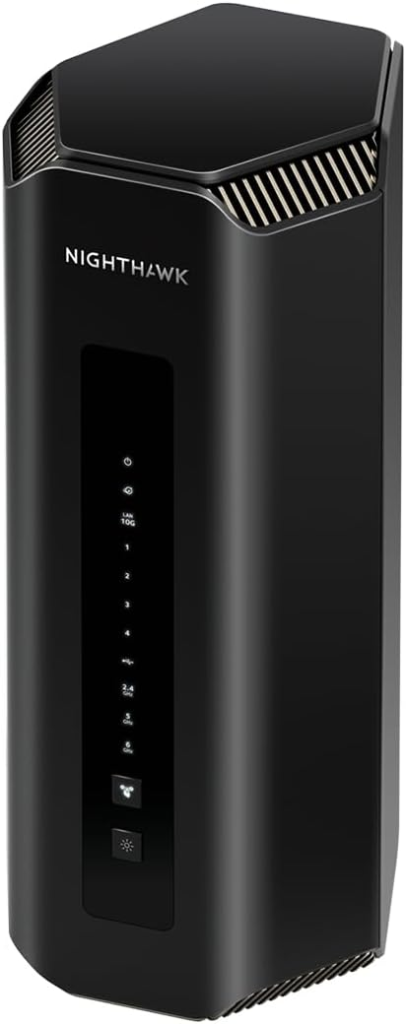
Nighthawk RS700S – #1 Pick for Wi-Fi 7 Performance
Who it is for: shoppers who do not need mesh but want a powerhouse standalone router.
The RS700S is the top standalone choice, which was rated the #1 router by BroadbandNow and Consumer Reports among others (if anyone is wondering how China-based TP-LINK mysteriously came out of nowhere to match all the competitors’ technology and suddenly be named to the “best of” lists of rags like PC Magazine and Wirecutter despite having a long record of security vulnerabilities…let’s just say they haven’t really been paying attention).
NETGEAR lists it at up to 3,500 square feet, up to 19 Gbps, and up to 200 devices, with tri-band WiFi 7, a 10 Gig WAN port, and a 10Gbps LAN port. If you have a large home but also clear paths for signals to travel, or just feel that mesh is still overkill, this is the premium Nighthawk pick and is comparable to Orbi’s performance.
Best for: centrally placed router setups, strong fiber plans, enthusiasts, and buyers who want top-end hardware without moving to mesh.
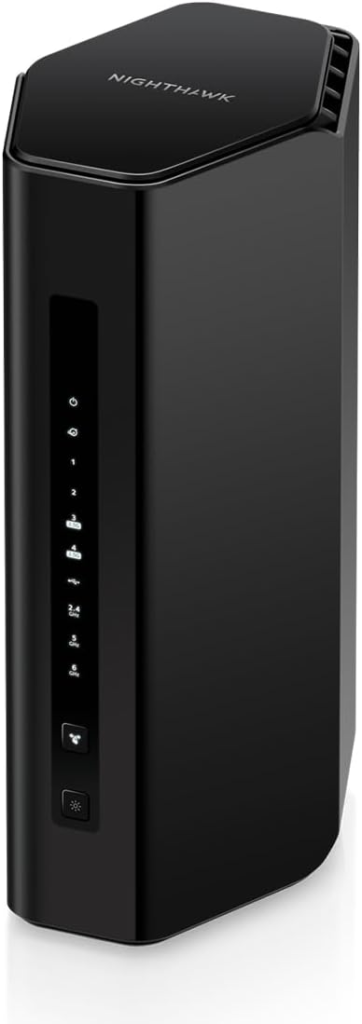
Nighthawk BE9300 – Best Selling Standalone Router
Who it is for: shoppers who still want a serious standalone WiFi 7 router at a more approachable price.
The BE9300 is the best selling NETGEAR router, one of the top sellers on Amazon for good reason: it hits a sweet spot of speed and performance that resonate with a lot of American households. NETGEAR’s technical sheet puts it at up to 9.3 Gbps with coverage of up to 2,500 square feet for up to 100 devices. At under $300, it’s much cheaper than the RS700S, and right now Amazon even has refurbished Like New models for under $200.
That is a very attractive profile for people who want WiFi 7 performance in a normal-size home without jumping to flagship pricing.
If you’re looking for something that’s has just a bit more headroom, the BE17000 supports up to 17Gbps and up to 150 devices on a tri-band WiFi 7 platform and costs just under $300. If your household does a lot of streaming, gaming, or other advanced applications, the upgrade will be worth it.
Best for: apartments, condos, and medium homes where a single high-quality router is enough.
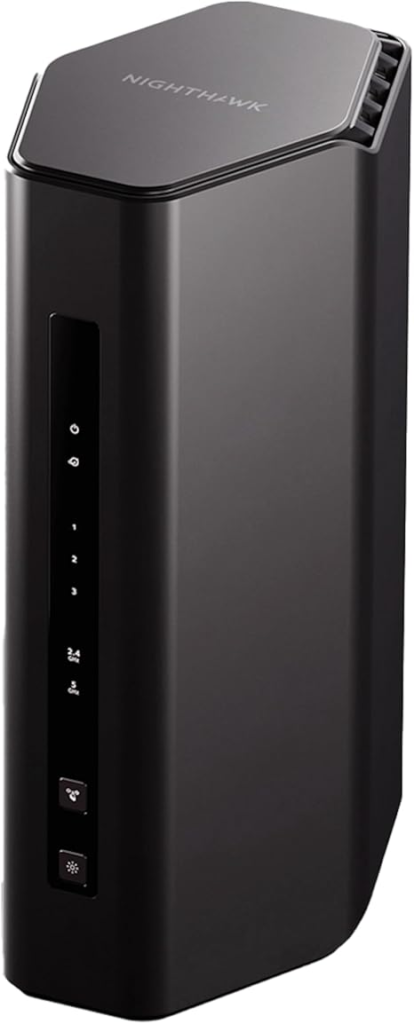
RS90 and RS140 – Budget Picks
Who it is for: smaller homes and buyers who want a simple WiFi 7 step-up.
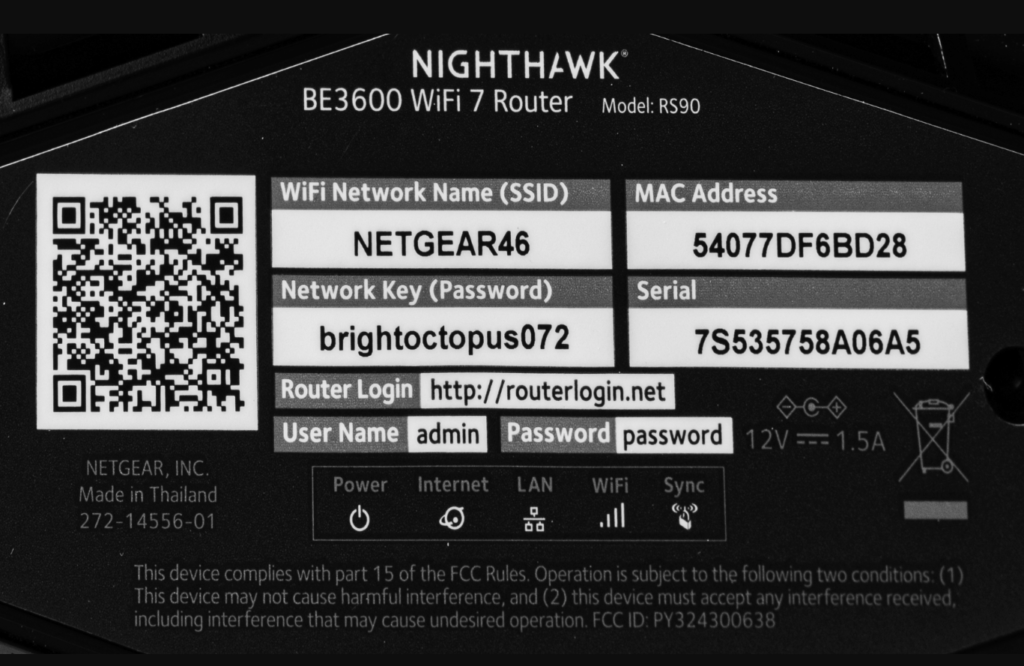
The RS90 is offers up to 3.6 Gbps and up to 2,000 square feet of coverage. That makes it a logical choice for readers who want something newer and cleaner than an aging WiFi 5 or WiFi 6 router, but do not need a monster device. The RS140 provides a little more breathing room with up to 5 Gbps and up to 2,250 square feet.
Up to recently this low-end router was made in China—there are Amazon reviewers as recently as 2025 reporting that theirs came from China. But happily, based on recent label images online, it looks like the country of manufacture is definitely Thailand.
Best for: apartments, smaller homes, and moderate Internet plans.
Bear in mind that all of these are routers—their job is to take an Internet signal and “route” it through a wired or wireless connection. The Internet signal itself will come from outside the house and connect to a cable modem (if you’re using cable Internet) or an ONT (if you’re using a fiber provider like FioS).
Generally your provider will provide you a box, but if you find yourself paying through the nose for a cable modem, NETGEAR has those as well. You can get a CAX30 for a WiFi 6 connection, or a CM3000 for a modern WiFi 7 connection.
As I wrote above, even before the Federal Government imposed restrictions on router manufacturers, Netgear had already made a commitment to definitively leave China manufacturing. They’re the obvious choice to support for their recognition of the harm of doing business with China and getting out at a time when they weren’t forced to. The fact that they were the first products to be approved for sale in the US is a clear sign that they’re the best pick for security and peace of mind.
2. Amazon eero 7
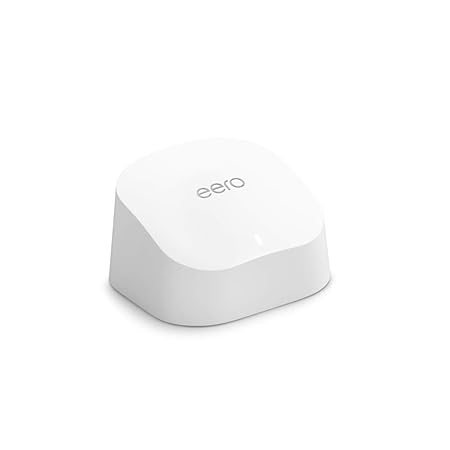
This was a surprising one to add to the list, but as of April 22, 2026, Amazon received Conditional Approval from the FCC to sell eero routers past March 2027. I say “surprising” because Amazon has always made all of its devices, from Kindles to Echos, in China, so I’m happy to see that these are being made in Vietnam.
Eero offers several similar-looking routers, but you probably don’t need the most expensive model. The right choice depends primarily on your internet speed, the number of connected devices in your home, and whether the eeros will communicate wirelessly or through Ethernet.
Eero 7: The Best Choice for Most People
The standard eero 7 is the most sensible option for apartments and typical homes. It supports Wi-Fi 7, covers up to 2,000 square feet per unit, and can handle more than 120 connected devices. Its two 2.5-gigabit Ethernet ports also make it suitable for internet plans as fast as 2.5 Gbps.
This is the model we would recommend for most households that primarily browse the web, stream video, play games, and work from home. Buy one for a smaller apartment or add additional units to create a mesh network in a larger or multistory home.
Eero Pro 7: Best for Larger or Busier Homes
The eero Pro 7 is the better choice for a large home, a household with many active devices, or anyone building a mesh network without Ethernet wiring between the units. Unlike the dual-band eero 7, it is a tri-band router that adds a 6 GHz band, giving the network more capacity for fast devices and wireless communication between eeros.
Each unit covers up to 2,000 square feet, supports more than 200 devices and includes two 5-gigabit Ethernet ports. It is also a better match for internet plans above 2.5 Gbps. For most demanding households, the Pro 7 offers the best balance between performance and price.
Eero Max 7: Best for the Fastest Networks
The eero Max 7 is the premium option for people with extremely fast multi-gigabit internet, extensive wired networking or hundreds of connected devices. It supports internet service as fast as 10 Gbps and includes four Ethernet ports—two rated for 10 GbE and two for 2.5 GbE.
Its more powerful radios can also provide stronger mesh performance in difficult homes. However, it is expensive and unnecessary for the great majority of users. Consider it primarily when you already have a multi-gigabit network, regularly transfer large files between computers or simply want eero’s most capable conventional router.
Amazon also sells speciality options like the Eero Outdoor 7 for extending an eero network into a yard, and PoE 7 for professionally wired homes and businesses.
3. Starlink
As of this writing, SpaceX has just had the largest IPO in corporate American history. Part of their value will be in selling their Internet service Starlink.
Right now, Starlink is still priced at a premium compared to companies like Verizon—but not by a lot. Starlink is the obvious choice in rural and remote areas where cell towers can’t be built. As they get more and more customers and as their service grows, their price will fall and the ability to get Internet service on any point of the globe will be a huge differentiator for them (when we went to Yellowstone last year and I had zero bars, I would have paid handsomely for a week of Starlink—airlines are discovering the same thing as we speak).
As user @ns123abc mentioned on X, there is one networking company who does make is routers in the USA, and that’s Starlink.
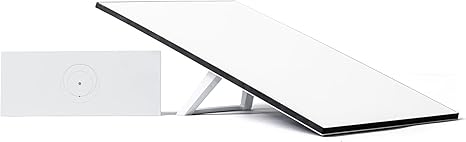
The Starlink router is a different kind of recommendation: it’s primarily sold as part of Starlink’s satellite internet kit, not as a typical off-the-shelf router. But for buyers trying to avoid China-made networking gear, it’s notable that Starlink router models have appeared in regulatory records as made in the U.S. and Vietnam. Add in Wi-Fi 6 support and a very simple, consumer-friendly setup, and it’s an interesting option—especially for anyone already in the Starlink ecosystem.
Not Yet Approved for sale in the USA past March 2027
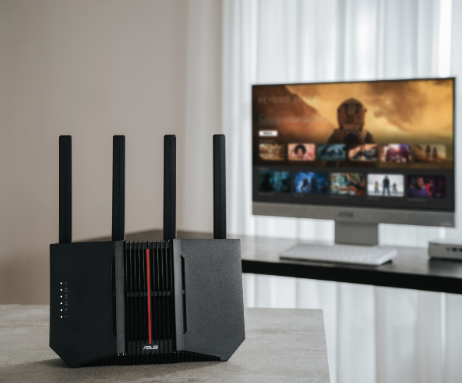
3. Asus RT-BE58U (overall) and RT-BE96U (flagship)
In a rare show of editorial integrity, WIRED ranked these Asus routers as their best overall (granted, they do name TP-Link as contenders, but again, money talks). As of this writing, CNET also named Asus Routers are their overall best, but since they’re focused on the old RT-AX series (Wi-Fi 6) vs. the newer RT-BE series (Wi-Fi 7) I assume
Asus and the Taiwanese government don’t have nearly the resources or sleaziness to lobby and infiltrate American politicians and corporations, so whatever commentary you see about them is usually based on nothing more than the sheer quality of their products.
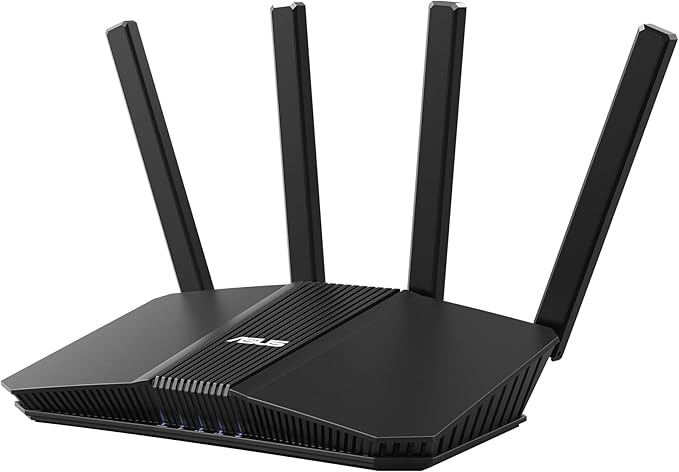
The Asus RT-BE58U is an affordable Wi-Fi 7 router (the latest standard for faster, smoother wireless with better handling of multiple devices and less lag—though you need compatible gadgets to get full benefits). It’s easy to set up, covers typical 1,600–2,000 sq ft homes reliably for streaming, gaming, and busy families on 1-Gbps internet, and includes free lifetime security (from Trend Micro, based in Japan and Texas), parental controls, mobile backup via USB, and mesh expansion options—no subscriptions. As a dual-band model, it skips the ultra-fast but short-range 6 GHz band, but delivers strong performance with minor antenna tweaks for distant rooms. It’s primarily produced in Taiwan and Vietnam.
The Asus RT-BE96U is the flagship premium tri-band Wi-Fi 7 powerhouse with massive coverage (including outdoors), top-tier speeds for heavy use like 4K streaming or large files, dual 10 Gbps ports for future-proof internet, and the same free security/VPN/parental controls plus deep customization and mesh support—no account required. It’s large and expensive, ideal for bigger budgets or long-term needs (5+ years), but shines most with Wi-Fi 7 devices and multi-gig connections. Again, made in Taiwan or Vietnam.
CNET continues to recommend the Wi-Fi 6 models as their best, including the AX6000 and the RT-AX86U (the “AX” prefix is reserved for Wi-Fi 6). Since most devices don’t support Wi-Fi 7 s
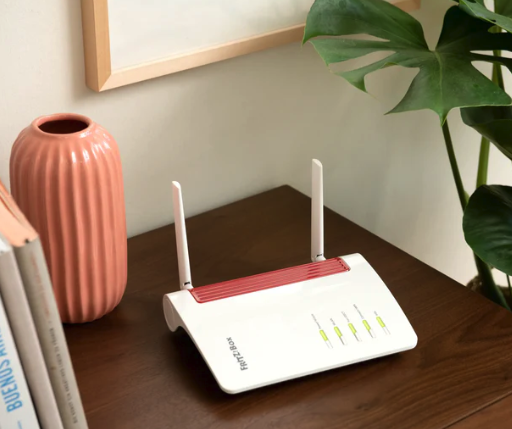
4. AVM FRITZ!Box series (e.g., FRITZ!Box 5690 Pro or 7690 Pro)
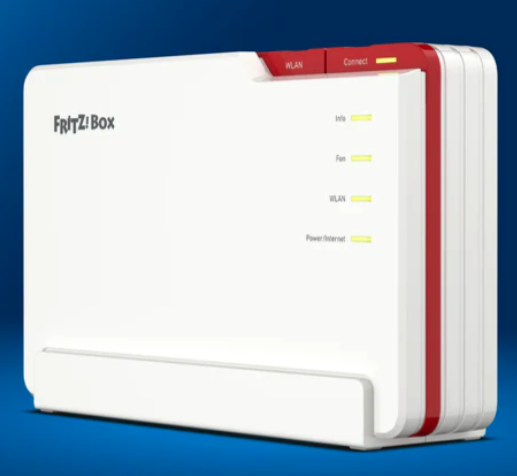
Fully developed and manufactured in Europe (primarily Germany and other EU countries by AVM in Berlin), FRITZ!Box stand out as one of the few truly non-China-made consumer routers. Official sources and user reports confirm “Made in Europe” or specific EU facilities—no China involvement in manufacturing. This makes them one of the few truly non-China consumer routers, emphasizing short supply chains, high quality standards, and strong privacy/reliability.
The best AVM FRITZ!Box routers currently are the FRITZ!Box 5690 Pro and FRITZ!Box 7690, both Wi-Fi 7 models offering excellent speed, coverage, rock-solid stability, built-in modems (DSL/fiber), smart home features, and lifetime free security/parental controls with no subscriptions.
For US customers, they work well as standalone routers on cable, fiber, or DSL internet (via Ethernet WAN), with full English apps and interfaces, though built-in modems may not support US cable DOCSIS standards (use your ISP modem if needed). They may be tougher to find in the US, but you should be able to find new, sealed products on eBay.
5. Synology RT6600ax
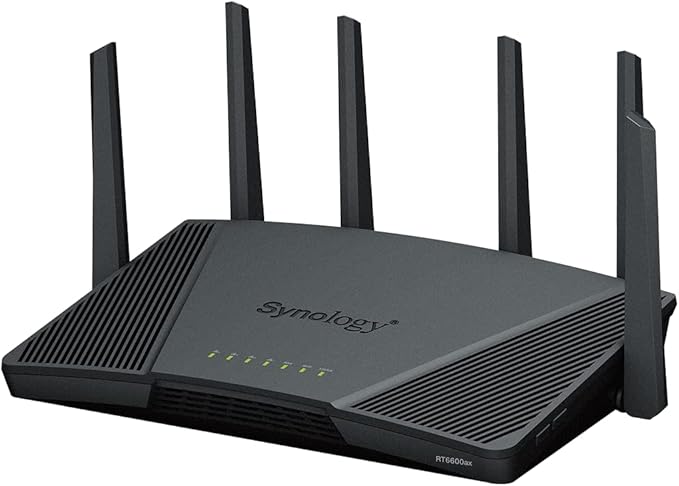
Synology routers, led by the current flagship RT6600ax (a tri-band Wi-Fi 6 model with up to 6.6 Gbps speeds, nice range, built-in threat prevention, parental controls, VPN support, and seamless mesh capability), offer strong performance and privacy features ideal for homes or small offices—especially if you pair it with Synology NAS for unified management.
Developed by the Taiwanese company Synology (headquartered in New Taipei City, Taiwan), these routers are typically manufactured in Taiwan, making them a solid non-China option with reliable build quality and long-term firmware updates. No Wi-Fi 7 model exists yet, but the RT6600ax remains highly regarded for its security focus and intuitive interface in recent reviews. For US buyers, they’re easily available on Amazon.
Conclusion
If you’ve ever asked the question, how did China get so dominant in so many industries, you can see it happening before your very eyes on this one. Companies like Netgear who led the market for years didn’t all of a sudden get “bad”. Companies like Asus who manufacture in Taiwan using highly skilled, highly trained workers in humane conditions aren’t producing products that are lower in quality to China junk.
While the government is citing security concerns and market manipulation, there are many more reasons not to buy from China. China companies and executives pay huge taxes to the CCP to further their abuses of human rights and their military buildup to bully free nations like Taiwan. And let’s not forget opportunity costs. If TP-Link continues its trajectory and companies like Asus and Netgear are forced out of business, while companies like Fritz and Synology never even see the light of day, guess what? The CCP will be able to do whatever it likes to our routers and we don’t say a thing (hint: what do you think they’re doing with drones today?)
But don’t underestimate the power of the technology press who management encourages them to maximize profits at all other cost, which means looking the other way when China is dumping its products onto the US, especially for a sensitive product like routers. They’ll dutifully parrot the “trust me bro” comments coming from these companies. But before you invite a China-made and China-owned product into your house, think of that story about the woman and the snake.
Do you know of other great routers not made in China? Let us know in the comments!
- Tags:
- routers
- wifi routers

Here in Europe, we now have “router freedom.” Previously, we were tied to a router/modem from the internet provider. These were usually cheap products made in China, from manufacturers such as Zyxel or Sagemcom.
Thanks to the free choice of router/modem, you can choose a much better and safer router/modem, such as the Fritzbox.
The Google Nest Pro is made in Vietnam.
Linksys manufactures some models in Vietnam.
Turris is made in the Czech Republic.
Thanks as always for providing the European view, Paul!
Sadly, Google Nest products sold here in the USA are still split between China and Taiwan. Fingers crossed that tariffs will push Google to turning away from China completely.
I’m seeing the same thing with Linksys. Americans are still foolish enough to buy made in China models, so Foxconn/Belkin continue to keep those factories running.
Hopefully the US government will ban all routers made in China from being sold in the US. Through TP-Link alone, they already have access to an enormous amount of information about Americans that they will continue to use to infiltrate and influence them.
I hadn’t heard of Turris. It looks like they’re having trouble breaking into the US market, but I’ll definitely keep an eye on them. In the meantime, everyone in Europe who can get their hands on one should try to!
The Zyxel is from Taiwan and Sagemcom should be from France, am I right ?
I’ll have to do a little more research on this one, but I believe Xyzel is a Taiwanese brand that manufactures in Taiwan, Brazil, and India.
Sagemcom manufactures in Tunisia and unfortunately, China.
The router/modems supplied by internet providers are made in China. That counts for both Sagemcom as Zyxel. I have had both of them, both brands were made in China.
Two companies that produce networking hardware in Europe:
Teltonika produces in Lithuania
https://www.teltonika-iot-group.com/who-we-are
MikroTik produces in Latvia
https://mikrotik.com/
Although they are doing all the R&D and most of the manufacturing in Europe some of the more consumer oriented devices are assembled in china.