Last updated May 30, 2026. Previously updated January 21, 2024 and September 14, 2024. Original publish date June 15, 2021.
Click here to skip the commentary and go straight to the “best of” list.
The rise and fall of the non-Chinese television
The first electronic television was invented by Philco Taylor Farnsworth from Utah in 1927 but even by 1946 only 0.5% of U.S. households owned a TV set. By 1954, 55.7% of households had them, and by 1962, 90% did. During this time a staggering number of U.S.-based brands popped up to meet the insatiable demand of consumers who wanted to watch Lucille Ball, Steve Allen, and Gunsmoke. And the manufacturing was done in the United States.
In 1995, the last original U.S.-based manufacturer, Zenith, ceased to exist as an American-based brand then it was sold to South Korea’s LG Electronics. Every one of the the great American brands you know–RCA, General Electric, Westinghouse, Sharp–were in name only, a nameplate to stick on a foreign-made brand in hopes that unsuspecting consumers wouldn’t notice or care.
Today, there are only a handful of TV brands left outside of China: Samsung and LG (South Korea), Philips (EU) and Vizio (US). A company in China had attempted to acquire Vizio in 2016, but that deal never happened so as of now they’re still a US company (they recently had their long-awaited IPO).
Sony (Japan) had been on the list, but in March 2026, Sony announced that they sold a 51% majority stake in its Bravia TV and home entertainment business to TCL. In a move of particular foolishness, they announced that Sony will continue to maintain a “joint venture” where it will provide its “high-quality picture and audio technology” to TCL. If anyone has been following this site, you know what this means. Within 10 years, the Sony brand will be no more, and TCL’s subcontractors will completely own and control Sony’s former intellectual property.
What brands do I avoid?
Pretty much every other brand you’ve heard of: TCL, HiSense, Seiki, Insignia are 100% based in China—this means that not only do China-based factories pocket the production costs, but China-based executives pocket all of the profit, and the CCP collects enormous tax revenue which will be used to build more missiles, build out their surveillance state even more, and subsidize more industries for them to take over.
Just recently, Japanese electronics giant Panasonic announced that they were outsourcing their TV production to TCL. And many recognizable brands like Toshiba, Sharp, Westinghouse have also been subsumed by China-based companies.
This is a prime example of where uneducated consumers don’t understand how state capitalism works. Do you ever wonder how brands like HiSense or TCL got so popular so quickly?
First, years of taking notes from manufacturing other countries’ products allowed China companies to mimic their technology to achieve a product that may not be equal to offerings from LG, Samsung, or Sony. At one point their products were “good enough”, but now they’ve stolen so much intellectual property that their products (or in cases like Sony, have been handed it on a silver platter) that they’re being named to “best of” lists.
Second, the CCP then subsidizes these companies so that they can offer comparable models at highly discounted prices to their competitors. The CCP is playing the long game: they’ve know that once they’ve cornered the market they’ll be able to charge whatever they want. It’s precisely the same kind of anti-competitive behavior that the U.S. Government has broken up when it happens within its borders, but is powerless to do anything about when a state does it.
And of course, it’s American consumers who ultimately make it happen when they rush to Walmart or Amazon and buy the cheap China brand to save a few dollars. This takes money away from companies that do real innovation and funnels it to allow the CCP to gradually take over the entire industry.
Do TVs made in China spy on you?
This has been a hot topic on social media for some time. Here’s the honest answer.
No, China is not (yet) at the Orwellian stage of watching you through your camera 24/7. There’s no giant center full of spies watching every American’s movement individually.
On the other hand, for years “smart TVs” of every brand—virtually all modern “smart TVs” like Samsung, LG, Sony, Roku, Amazon Fire, TCL, and Hisense—have had Automated Content Recognition (ACR) technology that takes screenshots or audio fingerprints of whatever is on your screen and sends it back to the manufacturer or to a data broker to build profiles of your habits, sell it data brokers, and target you with ads.
And we’re not talking one snapshot every few hours—in some cases these snapshots are taken as often as every 500 milliseconds apart, or thousands of dimes an hour, even if you’re not signed into any account. It’s part of the disclaimer you accepted when you set up the TV and decided was too long to read.
This isn’t the stuff of conspiracy theory; you can read all about it here. ACR doesn’t just work when you’re connected—it’ll work if you’re watching a DVD, playing a video game, or using your TV as a computer monitor.
Now think about it. Most Americans are fine giving up some of our security for convenience. Who really cares if a company knows that I watch Bugs Bunny and play Super Mario Kart?
But think of all this data in the hands of the People’s Liberation Army. They’re like Santa Claus. They know when you are sleeping. They know when you’re awake. They know when you’ve been bad or good. And don’t think for a second that the CCP is not building up a detailed profile of every man, woman, and child in the United States for their strategic and military advantage using the same data that Google uses to send you their ads.
Remember that EVERY major Chinese brand (especially in consumer electronics and TVs like Hisense, TCL, Skyworth, Xiaomi, etc.) has the Chinese Communist Party embedded in meaningful ways. This is by design under Chinese law and policy, not the stuff of conspiracy theory. Look up National Intelligence Law (2017), Article 7, and countless other rules . This is especially true in state-owned brands like Hisense, as well as “private” major brands like TCL.
The simple solution? Unplug your TV from the Internet. But if that’s not possible, go to your TV’s settings right now (whether it’s made in China or not) and turn off any feature that sounds like “Automated Content Recognition”, “Viewing Information Services”, “Live Plug”, “Personalized Ads”, “Collect App Usage”, or “Interest-based Advertising”. And if you have a China branded TV like HiSense and TCL, pray that they haven’t built in backdoors that ignore your settings. Or better yet, ditch it and buy a non-China brand.
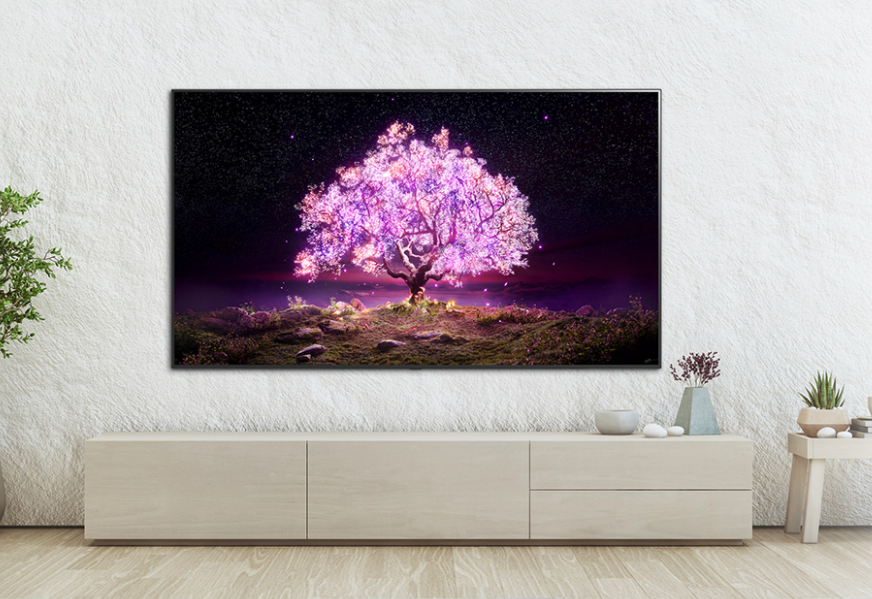
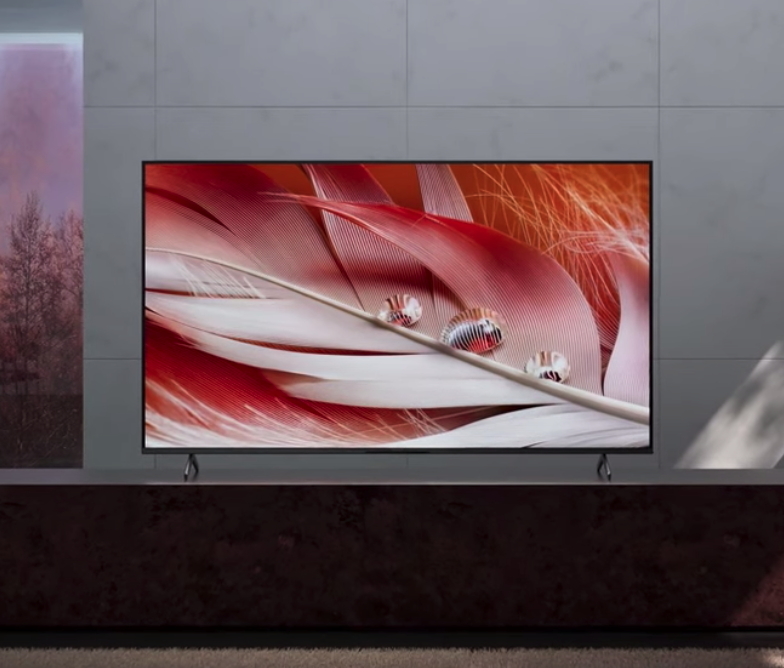
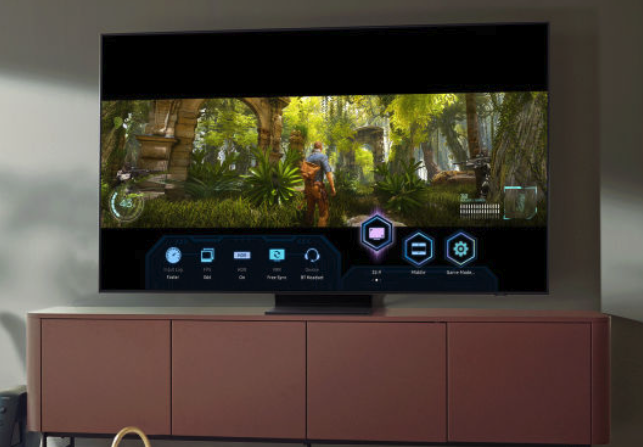
Are any TVs not made in China?
Here’s where it gets complicated. As we’ve seen in posts for other kinds of products, you simply can’t find a TV where 100% of the components are made outside of China. For example, LG Electronics (who builds TVs) sources its OLED panels from LG Display, who had produced their panels in South Korea but is shifting production to Guangzhou, China. So regardless of what TV you buy, a portion of it is going to prop up the CCP.
But you can stem the bleeding. For one thing, if you buy from the big non-China brands: Samsung, LG, Philips and Vizio, at least you can support some non-China employees, such as their product development, marketing, or administrative departments.
And ideally, you’ll want to find a company that at the very least assembles their products outside of China, even if many or most of the parts are made in China. This is where the large form factor of the TV helps. A manufacturer in China could assemble a 65″ or 75″ TV and ship it 7,000 miles away, but at that size and weight it’s probably more cost effective to build a plant that’s closer to their target market and hire locals to assemble the product. So at least there’s some benefit to the local economy.
Manufacturers tend to be coy about where their parts come from and where their products are assembled. If you read what their PR departments post as a response to Amazon questions a typical responses is something vague like “our TVs are built all over the world”, so we don’t know if 99% of a TV was made in China and the other 1% was divvied up between other countries.
A little Internet sleuthing helps, however. As of 2021, Samsung has recently ceased TV production in China. Sony TVs intended for the North American market are assembled in Mexico. LG TVs are also produced in Mexico for the North American market and in Poland for the European market. Vizio does maintain manufacturing facilities in Taiwan and Mexico, so there’s a decent chance your North American-based set was made there.
The only way to tell for sure is to visit your local electronics store and see for yourself what the “Made in” or “Assembled in” label says on the particular unit you’re looking for. You can also search for “China” or “Made in” in Amazon reviews to see if anyone reported widespread sales of China-made units to the US.
The Best TVs Not Made in China
While I used to feature OLED, LED, and LCD TVs on this list, I decided to focus this list for 2026 on just OLED TVs. The price has gone down enough to make them affordable, and (for now) the components are still mostly made outside of China, while the margins on cheaper LED and LCD TVs have dropped so low that most non-China brands don’t even bother making them anymore.
1. LG C5 OLED (or G5)
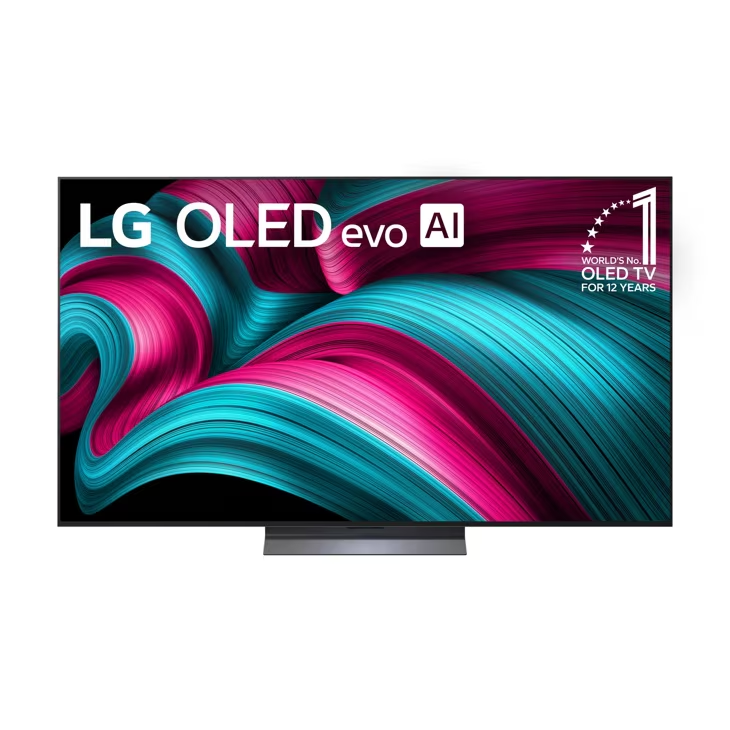
LG’s G series, headlined by the newest LG OLED evo G5, remains one of the very best TVs money can buy, if you’re willing to pay a premium. This is the TV for people building a true luxury home theater or a high-end modern living room. It delivers the brightest OLED picture available along with the deepest, most perfect blacks, thanks to LG Display’s advanced panel technology.
For most normal people who just want an outstanding everyday TV, the LG C5 OLED is a clear winner. It offers excellent picture quality with perfect blacks and infinite contrast, wide viewing angles, and strong gaming performance thanks to very low input lag and a 120Hz refresh rate.
I prefer buying my equipment directly from the manufacturer whenever possible, but these sets are also widely available at Best Buy and Amazon.
Important note for anyone trying to reduce reliance on China: LG Display has now completely exited the LCD business. That means virtually every LCD TV on the market today uses a panel made in China. On the OLED side, LG Display manufactures panels in both South Korea and China. Higher-end panels are generally produced in South Korea, while some lower-cost production still happens in Guangzhou. Hopefully, LG continues to keep its intellectual property close to the vest, as any IP sent to China will likely be stolen.
Final assembly for TVs sold in the U.S. market is done in Mexico.
LG currently holds nearly 50% of the global OLED TV market. Let’s hope the company uses that dominant position to shift more panel manufacturing back to South Korea (and friendly locations like Mexico) instead of following Apple’s path and becoming dangerously tied to a tyrannical state.
2. Samsung S95F OLED
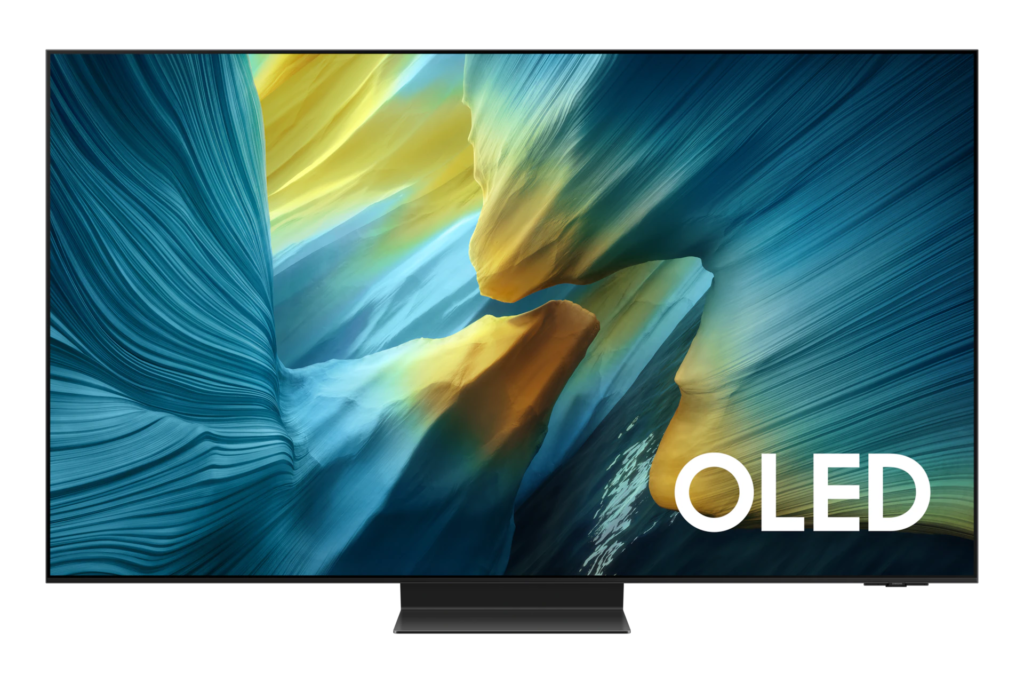
More and more consumer review sites are rating the Samsung S90F in their elite list of top TVs, including Consumer Reports and Wirecutter. You can buy it direct from the manufacturer or from Amazon.
It uses Samsung’s own QD-OLED technology, which delivers fantastic 4K HDR picture quality. Reviewers can’t stop talking about how ultra-thin it is, how it throws a brilliant array of colors, and how strong it is for movies. One reviewer said it reminded him of the color and motion of a plasma set, but without the energy consumption.
Since I originally wrote this post, Samsung has cleaned up a lot of the drama around where they source their panels. They’ve completely walked away from making LCD panels (which basically meant turning to China) and doubled down on their own QD-OLED tech, all manufactured in South Korea. For the U.S. market, these TVs are assembled in Mexico or Vietnam, not China. That makes the S90F an even stronger choice if you’re trying to keep your money out of Chinese supply chains.
China has all but dominated the market for LCD panels and is still aggressively trying to take over OLEDs from Korea, which (for now) continues to lead in premium TV panels. LG and Samsung together still hold the high ground on quality and innovation. The biggest threat isn’t China itself, it’s American consumers who salivate over buying a cheap China-brand OLED TV instead of supporting solid Korean companies like LG and Samsung.
Samsung also makes the S90F which is their sweet-spot “value flagship” for most normal people. It uses the same excellent Korean-made QD-OLED panel as the pricier S95F, with its vibrant colors, perfect blacks, and smooth motion, but at a much more reasonable price. For the U.S. market it’s also assembled in Mexico or Vietnam, so you get near-flagship performance without feeding Chinese supply chains. It’s a perfectly good TV if you don’t necessarily need every last bit of brightness or fancy anti-glare.
3. Sony BRAVIA 9
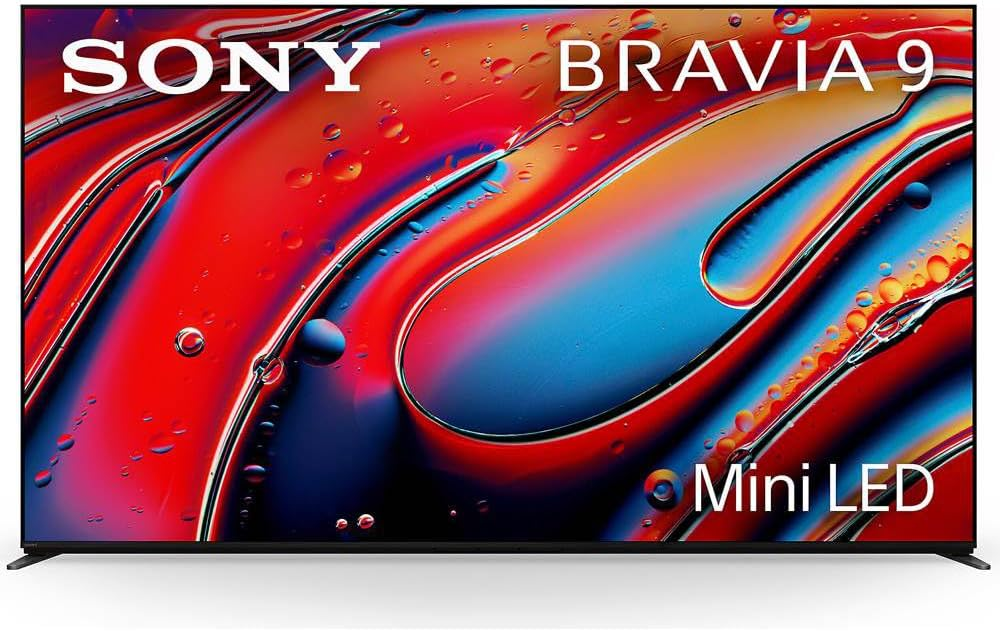
Sadly, this is the last time that a Sony TV will make it onto this list. I’ve been a loyal customer of Sony since the days of Trinitron CRTs, but their selling out to TCL will be the official end of that long streak.
Sony TVs destined for the US market have been assembled in Mexico for a long time, and that hasn’t changed with the 2026 lineup. Sony gets its panels and key technology from partners like LG and Samsung, so the important parts are still made in Korea. I expect that nothing will change immediately once TCL takes over majority control in 2027, but remember that even if they keep the TVs made in Mexico, the profits will be going to China and business decisions (including how much they use their TVs for data collection) will be in the hands of the CCP.
The standout model this year is the Sony BRAVIA 9 II True RGB Mini LED. This TV isn’t cheap — it sits firmly in the premium category — but it continues to rank near the top in expert shootouts for overall picture quality. On Amazon and other retailers you’ll see it listed as both “Mini LED” and “QLED.” That’s because it uses thousands of tiny Mini LEDs for the backlight (giving it insane brightness and precise contrast control with very little blooming) plus quantum dot technology that delivers billions of accurate, vibrant real-world colors.
As an Amazon reviewer said, for all intents and purposes this will be the last Sony TV ever made. Grab it while you can.
4. Cello Smart TVs – Best for the UK
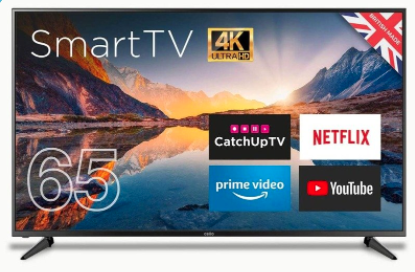
I tend to focus on the US market mostly, but for those of you visiting from Europe, Paul in the comments below brought up Cello TVs. I never heard of this brand before but the more I learn about them the more I’m impressed. They manufacture all of their TVs in County Durham in the North East of England.
Cello has an impressively low price point (alas, it would be cost-prohibitive to ship them across the Atlantic Ocean, so we can’t find them here in the US). Their reviews on Amazon are consistently high (sadly, it looks like China trolls are on Amazon UK upvoting every negative comment to get them to rise to the top, but focus on the overall ratings). If you need a basic TV at a great price that supports communities and the economy in the UK, you should definitely get one of these.
You can find them at Amazon UK and also through various retailers.
Conclusion
While it’s great to see South Korean brands continuing to be at the forefront of innovation, American consumers are doing to the TV industry what they did to so many other industries.
Thinking they’re getting “great deals”, they pour money into China by buying their cheap, low-end TVs. Here’s the problem with that. It used to be that brands like Sony who were true innovators in the world would sell expensive TVs to the high end of the market and sell cheaper but still good quality TVs to the lower end of the market. It’s at that lower end that a brand could enjoy huge sales volume and decent margins, which they would funnel back to their R&D to continue to innovate.
Here’s what China has done. They steal enough IP to produce TVs on the low end of the market that are “good enough”—the reality is that their failure rate is much higher than TVs built elsewhere, but American consumers are so clueless that they don’t realize they’re buying a new TV every 3-5 years instead of owning one for life. The CCP, of course, encourages its businesses to dominate markets, and even subsidizes them (and in the case of Hisense, owns them) so they can always beat everyone else on price.
In time, China dominates supply chains, controls the markets, and cuts every other brand at the knees so they no longer have enough profits to reinvest in innovation. If it weren’t for the sheer stubbornness of brands like LG and Samsung who continue to take pride in their workmanship, we would never see innovation in the TV industry again.
So I don’t really blame Sony for “selling out”. I blame any American consumer who ran to buy a TCL or Hisense TV instead of a Sony TV when Sony did still sell affordable models. And if we don’t wake up, we could see Samsung and LG going the same route.
Do you know of other TVs not made in China worthy of mention here? Let us know in the comments!
- Tags:
- electronics
- tvs

You mentioned Philips in your list of non-Chinese brands, which surely is true as Philips is from the Netherlands.
However, the TV division was sold for 100% to the Chinese TPV Technology in 2014. TPV Technology may use the Philips logo on their products for a fee.
This is one of the most deceptively disgusting constructions I’ve ever seen. The only Philips thing about these TVs is the logo. It is a 100% Chinese product.
I own a Loewe TV, made in Germany. The last remaining TV brand that actually develops and produces in Europe.
What about Devant?
Established in 2003, Devant is a Filipino brand that specializes in designing and manufacturing cutting-edge TVs and sound systems.
Finden Technologies, Inc. is a corporation with a vision of becoming the No. 1 distribution company of world-class consumer electronics and household appliance brands in the Philippines.
China oem made, rebranded by devant
cello are a British made tv made in England so you are incorrect
Nice the addition of the Cello brand, I didn’t know that brand.
I watched a video of Cello’s production. I can see that it is really only a final assembly and testing what is done in England. In the video, the chief of development department said that he spends time in China, so I assume that the whole pre-assembly and the materials are made in China. Don’t know for sure though.
The Loewe brand produces much more in house, in Germany they really build a TV from scratch.
Loewe went bust and entered a partnership with China’s premium TV brand Hisense, who now manufacture and design their TVs. The German team simply design the bezels, etc.
Hisense doesn’t make Loewe’s TVs. They have a partnership with Hisense in which technical systems are shared. This is not good, I think so too. But the development and production are still in Kronach. The plans from recent years to outsource production to Hisense are old news.
Loewe is owned by Skynet of Cyprus.
This is incorrect. Cello only “assembles” parts in the UK from a very low end (low quality) Chinese supplier. I wouldn’t recommend them AT ALL – just look at the terrible reviews online.
There are incorrect facts about Philips too. Philips, a Dutch company with Dutch R&D, transferred the TV business in Europe to TPV (Hong Kong, not China as such), who maintain R&D in Holland with many ex-Philips (Dutch) staff.
In the US, Philips transferred the TV business to longterm partner Funai, a well-established Japanese corporation.
Sharp, also Japanese, is part owned by Foxconn (Taiwan NOT China), so that is a good recommendation too, as it’s Japanese in origin/partly.
Samsung has strong ties with TCL (China) behind the scenes.
If you are buying Chinese, the two best brands are currently Hisense and TCL.
I recently purchased a mid level Sony Bravia 55” LED TV. As the article above mentions it was made in Mexico. I am extremely happy with the display, great viewing angles, and the black images display very well. It was a great price point, slightly higher than some of the leaser known chinese brands, and actually cheaper than a couple!
Question. Do Element Electronics and Onn. qualify for Made in China? Although they’re made in China the assembly is finished at their headquarters in South Carolina
That’s a great question, and it shows the mess of the United States’ federal laws about country of origin disclosure.
The FTC regulates “made in USA” claims.
https://www.ftc.gov/tips-advice/business-center/advertising-and-marketing/made-in-usa
However, you’ll quickly see that only a small number of products (automobiles, textiles, wool, and fur products) are regulated by the FTC. In order for these products to be called “made in USA”, “all or substantially all” of their components must be made in the USA.
The U.S. Customs Service is the federal agency that regulates how every product imported into the United States must have a “made in” label. Their rules apply to all product categories, and are a lot more fuzzy. The Customer Service considers the country of origin to be the last country in which a “substantial transformation” took place.
In the case of the TVs you mention, even if all of the components were made in China, because the final assembly was done in South Carolina, the US Customs Service would probably allow them to say “made in the USA”.
As you can see, it’s a mess, and corporations and their lobbyists keep it intentionally so. If they can fool consumers into thinking a part was made by someone paid $15/hour in the US vs. someone working in a labor camp in China, they make more money and the consumer won’t know any better.
I’ll be honest, that’s been a challenge as I put together this blog. In certain industries (e.g., TVs, air fryers), it’s likely that all the components are made in China. I still like to call out “assembled in USA” vs “assembled in China” though, because at least SOME of the money will still go to help the US.
But heaven forbid, if we ever find ourselves in a situation like we are today with Russia where we want to cut off our ties, it won’t be easy because the CCP (very deliberately) made sure that over the last 30 years China has its tentacles into every aspect of American life, the idiots leading US and European corporations can’t see beyond the next quarterly financial report, and the idiots in the US Government who are supposed to have a longer term view are too busy stuffing their pockets with China influence.
The best we can do is hang on and support those few companies that have not bent a knee to China. There aren’t a lot of them left.
Unfortunately, they are not idiots. They’re just willfully blind.
Evidently, the ONN TVs that I recently looked at state that they “Assembled In USA. Fancy that. I obviously don’t know where the parts come from. But, it is what it is – I guess.
Our Hitachi TV says it is made in Poland 🇵🇱
I recently bought a LG OLED C1 at a discounted price, as it has been phased out by newer model OLED C2.
The screen display is quite good, made me feel comfortable in my eyes , not sure the portions made in China though
Can you update the list for 2023? I realize this is a real problem but I try to not buy China made products and it is really difficult. I recently shopped for a new computer and purchased a Beelink which claimed to be made in Texas. Upon arrival I found it was clearly labeled “Made In China”. It works fine but I feel duped.
Best Tv:s not from China are Panasonics, because they are best overall and not made in China. Even Hollywood use them because of the color accuration.
Unfortunately, Panasonic TVs are outsourced to TCL, which is a China-owned brand. Some of their very high end equipment may still be made in Japan, but sadly, virtually all of their consumer models are made in China. They closed their last plant in the Czech Republic in 2022, and it sold its plant in Mexico a long time ago.
If you can find a specific model that’s made in Japan, please let us know. Thanks!
I just found out that Metz, the company known for making flash units for cameras, now builds TVs.
Made in Germany!
https://metz-ce.de/en/company/made-in-germany
Please increase your EU information. We’re former Americans living in France who do not want anything that is made in China. Thanks for your great work!
That is a very good!
I often post the European alternatives under various posts and on the forum.
Check out the posts with the EU flag and you will find a lot of EU information.
Im in the UK and have had a Cello TV for 3 years and overall Im pleased. Im buying another one soon for my lounge. If youre in the UK then give them a go.
Only assembled in England. The parts are from a cheap Chinese manufacturer. Sorry.
Great insights! It’s refreshing to see a list of TVs that support alternatives to China-made products. I appreciate the emphasis on quality and ethical sourcing. Looking forward to exploring these options!
Great insights! It’s refreshing to see a focus on quality TVs that support manufacturers from other countries. I appreciate the emphasis on ethical purchasing while still getting top-notch technology. Looking forward to exploring these options further!
Great post! It’s refreshing to see options for quality TVs that aren’t manufactured in China. I appreciate the insights and the emphasis on supporting brands that prioritize ethical production. Definitely checking out some of these recommendations!
Great to see a focus on TVs not made in China! With so many options available, it’s important to support brands that prioritize quality and sustainability. I appreciate the insights in this post!